The biggest thing holding back capable home robots isn’t algorithms or compute — it’s data. You can’t just scrape the internet for the kind of fine-grained manipulation data a robot needs to, say, fold a shirt or pour a drink. Hiring grad students to teleoperate a robot arm for hundreds of hours is expensive, slow, and frankly, soul-crushing work. So what if you cut the robot out of the loop entirely?
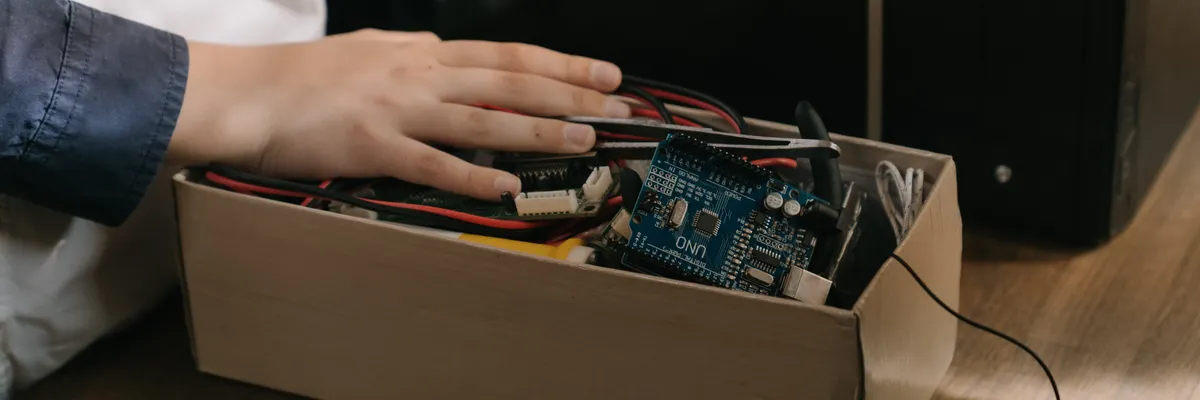
That’s the bet behind Grabette, a new open-source hardware project from Hugging Face researchers. It’s a $250 handheld gripper packing two cameras and a Raspberry Pi, designed to record 6-DoF manipulation data using nothing but a human hand. You literally pick it up, perform a task, press a button to record, and the system spits out a clean, robot-ready dataset in the LeRobot format. No robot arm, no lab, no teleop rig required. One camera is a cheap wide-angle fisheye to give the policy a wrist-level view of the action, while a dedicated RGBD camera handles robust 6-DoF trajectory tracking. The gripper’s joint values are captured by magnetic encoders, all synced to a single clock on the Pi.
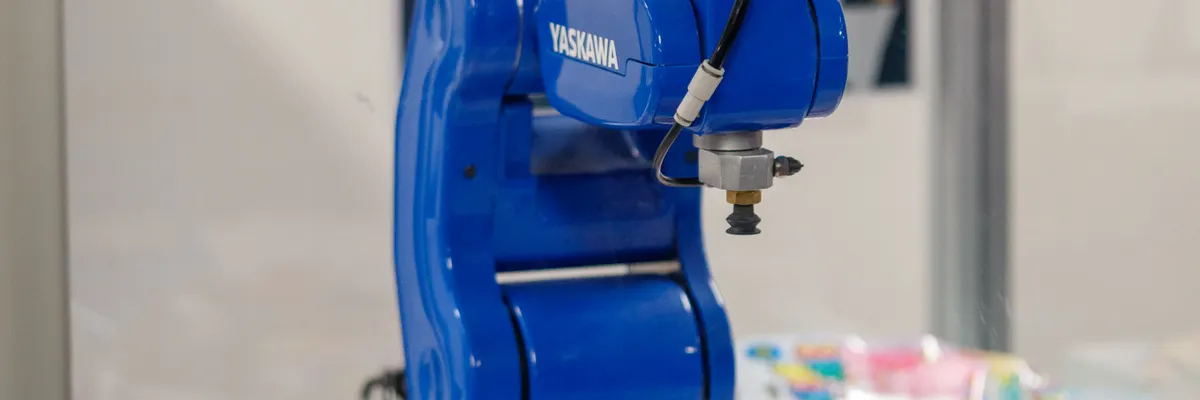
The project is directly inspired by Stanford’s Universal Manipulation Interface (UMI), which proved you could train visuomotor policies from handheld demonstrations. But where UMI showed the academic recipe, Grabette is a deliberate push toward scale through community. Everything is open: the hardware BOM, the processing pipeline you access through a browser dashboard, and the resulting datasets that live on the Hugging Face Hub. The system also ships with a robotic twin, Gripette, which mounts on an arm to execute the learned skills.
To prove the loop works, the team collected 200 demonstrations and trained a working policy. But they’re clear that Grabette itself is the release, not a specific model. The real move here is structural. If recording a manipulation demo is as easy as shooting a video on your phone, the data bottleneck stops being a research problem and starts being a scaling problem — the kind that thousands of contributors can chip away at. It’s a bet that the robot future won’t be built in a handful of corporate labs, but by a distributed network of builders willing to just hit record.