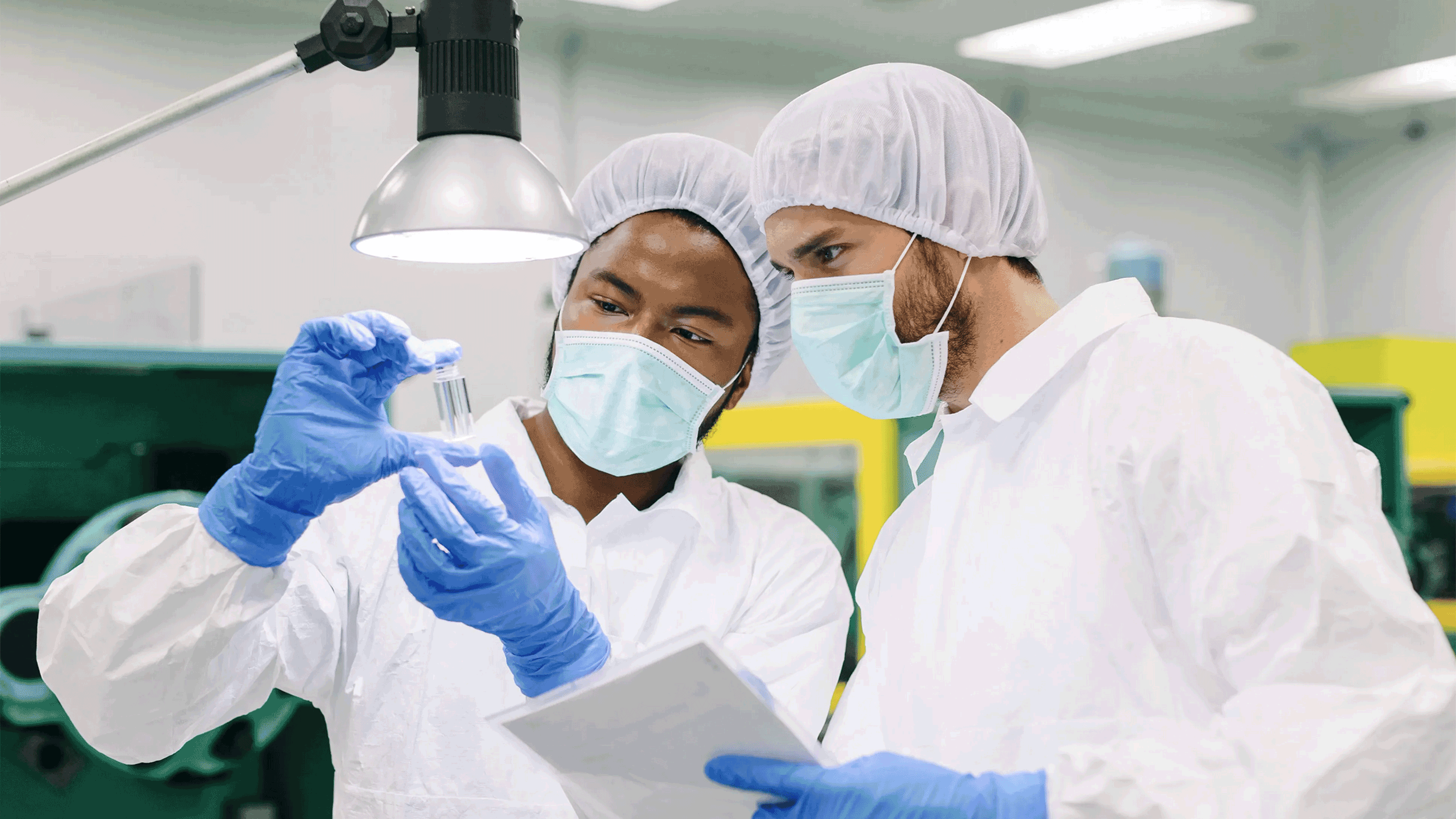
For more than ten years, artificial intelligence has quietly moved from the lab bench to the front lines of scientific inquiry. The narrative is no longer about what these models might do someday. It is about what they are doing right now. The shift from theoretical research to tangible application marks a critical turning point. We are seeing measurable progress in fields that directly affect human survival and quality of life.
This transition is not happening in a vacuum. Partnerships between tech developers, local communities, and researchers are driving adoption in specific, high-stakes areas. Disease detection is becoming faster and more accurate. Natural disaster prediction models are giving vulnerable populations crucial extra time to prepare. These are not vague promises of efficiency. They are concrete tools saving lives and protecting infrastructure today.
Education and economic access are also seeing significant disruption. AI tools are expanding learning opportunities for students who previously lacked resources. Simultaneously, new platforms are unlocking economic potential for underserved groups. The focus has narrowed from broad automation to targeted problem-solving. This specificity allows for deeper integration into existing workflows without requiring a complete overhaul of institutional structures.
The real test now is scalability. Can these localized successes replicate across different geopolitical and economic contexts? The technology is ready. The challenge lies in ensuring equitable distribution. If AI remains concentrated in wealthy regions, its promise of universal benefit fails. The next decade will determine whether this tech becomes a global equalizer or just another tool for the privileged. The infrastructure exists. The will to distribute it fairly is the missing variable.


