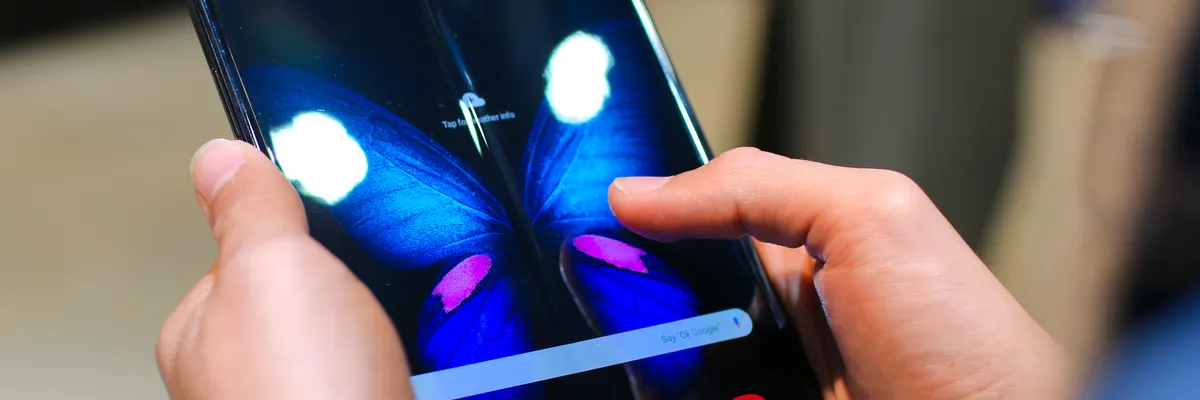
Apple finally stepped into the foldable arena this Wednesday at its Surprise and Shine event, unveiling the Duo. It is the company’s first attempt at a device that bends, entering a market where consumer interest is high but hardware reliability has often lagged. Most current foldables suffer from visible creases or hinge failures because the mechanism endures twice the mechanical stress of a standard slab phone. Apple is betting that its manufacturing precision can solve what software alone cannot.
The real story here isn’t just the screen; it is the hinge. Johny Srouji, Apple’s chief hardware officer, revealed that the company used AI algorithms during production to match every single hinge component with its ideal housing unit. This isn’t a one-size-fits-all assembly line approach. By ensuring perfect alignment for each individual device, Apple aims to prevent the misalignment that typically leads to premature wear. It is a significant shift from traditional mass-production tolerances to bespoke, algorithm-driven fitting.
To further combat degradation, the manufacturing process involves a confocal laser scanning the topology of every unit. The system then 3D prints up to 25 micro layers of custom photopolymer directly onto the parts. This step eliminates residual waviness that could cause friction or uneven folding over time. Srouji also noted a custom nano-texture finish designed to cut glare, paired with a multi-layer lamination strategy for added structural integrity. These are not minor tweaks; they are fundamental reimaginings of how a moving part should be built.
While the engineering sounds robust, the proof will be in the daily use. Foldable phones have historically struggled to maintain their premium feel after months of opening and closing. Apple’s use of AI to customize physical hardware at scale suggests they are treating durability as a data problem rather than just a materials science challenge. If the Duo can avoid the creaks and wobbles that plague competitors, it might finally make the form factor viable for the mainstream. But until long-term reviews hit the streets, skepticism remains the default position for any bending screen.


