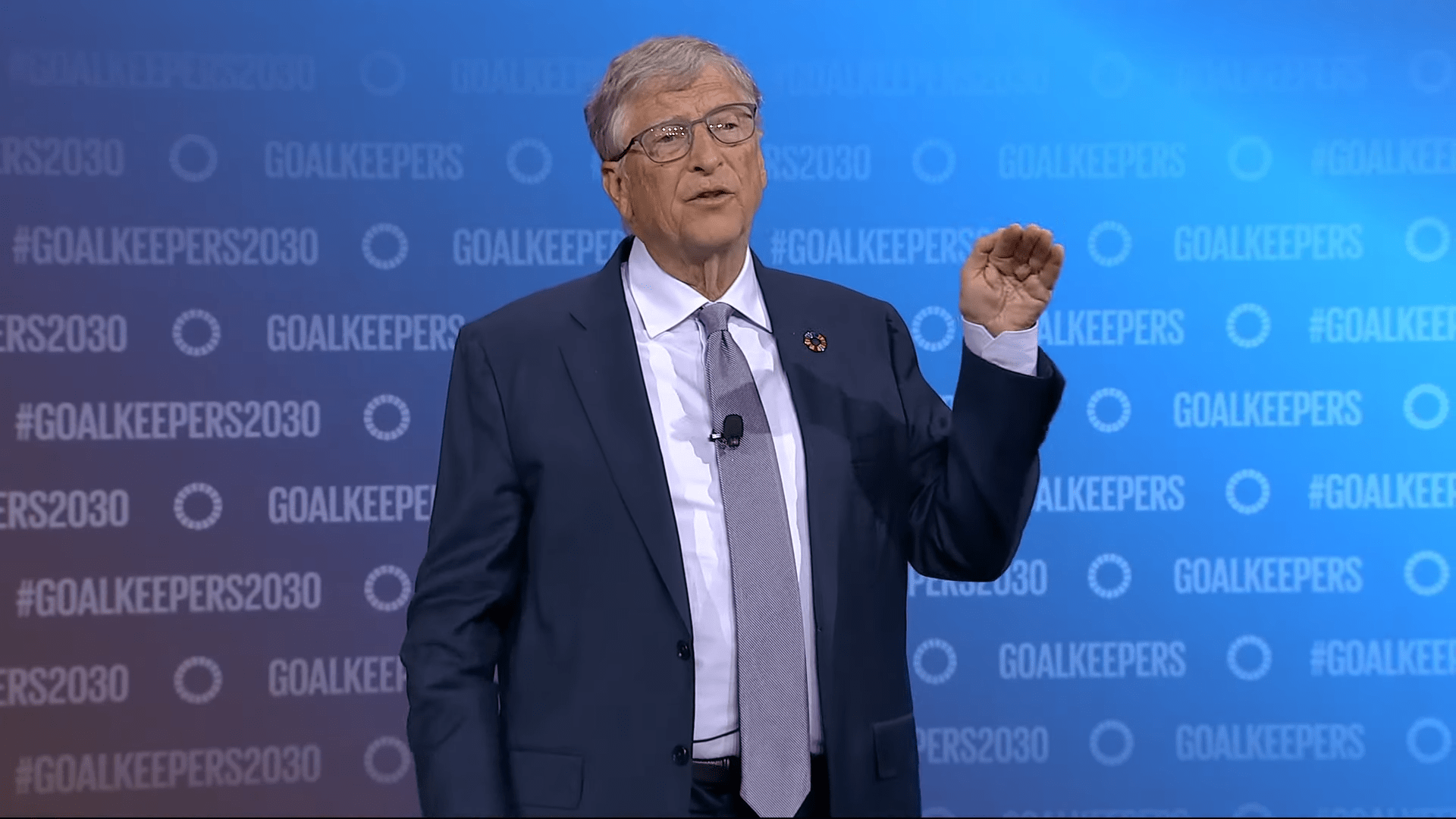
Bill Gates is not mincing words. In a nearly 6,000-word essay and a New York Times interview, the Microsoft co-founder describes the AI transition as “one of the most turbulent times in human history” — and he’s pointing the finger directly at his own industry for keeping the public calm while privately panicking. The quote that’ll make rounds: “In private, people who understand how good this stuff is, and how much better it’s getting, they’re very worried.” Publicly, those same people tell each other, “Hey, man, don’t say that. It’s bad for us — the next trillion dollars we’re trying to raise.”
Gates’s core argument is that the standard reassurance — past tech shifts created more jobs than they destroyed — doesn’t apply this time. The PC took two decades to reshape work. AI runs on devices people already own and adapts to us rather than requiring us to adapt to it. That speed is what worries him most. He points to a Stanford study showing employment among young workers in AI-exposed jobs has already dropped noticeably, while older workers have been spared so far. Entry-level and mid-level roles in sales, customer service, software development, and legal support face the most immediate pressure. Blue-collar work isn’t safe either, especially as robot costs fall — much of that development happening in China.
But job loss is only the first of three threats Gates outlines. The second is bioterrorism. A few people with access to advanced AI could develop new pathogens, he warns, and the problem is that useful and dangerous capabilities are nearly impossible to separate. A model that finds a security hole to close it also helps someone exploit it. The third threat is quieter but no less corrosive: AI companions that never disagree and are always available carry real addiction potential. He cites a Stanford and Carnegie Mellon study showing that the more intensely people used emotional chatbots, the worse they felt.
Gates’s proposed fixes are more interventionist than anything you’d expect from a tech founder of his generation. He rejects self-regulation outright — “No, thanks!” — and calls for national and international oversight bodies modeled on nuclear weapons, aviation, or ozone protection regimes. He wants a token tax on AI use and robots to level the playing field with human labor, since hiring a person triggers payroll taxes while buying a robot gets written off. Certain jobs, like caregiving, should carry a “Human Reserved” label. What makes this all land harder is the personal note: Gates says Anthropic’s Claude Code shocked him by being, in a meaningful sense, better than he is at programming. That’s the moment the abstract risk became concrete — even for the guy who built the industry that made this possible.


