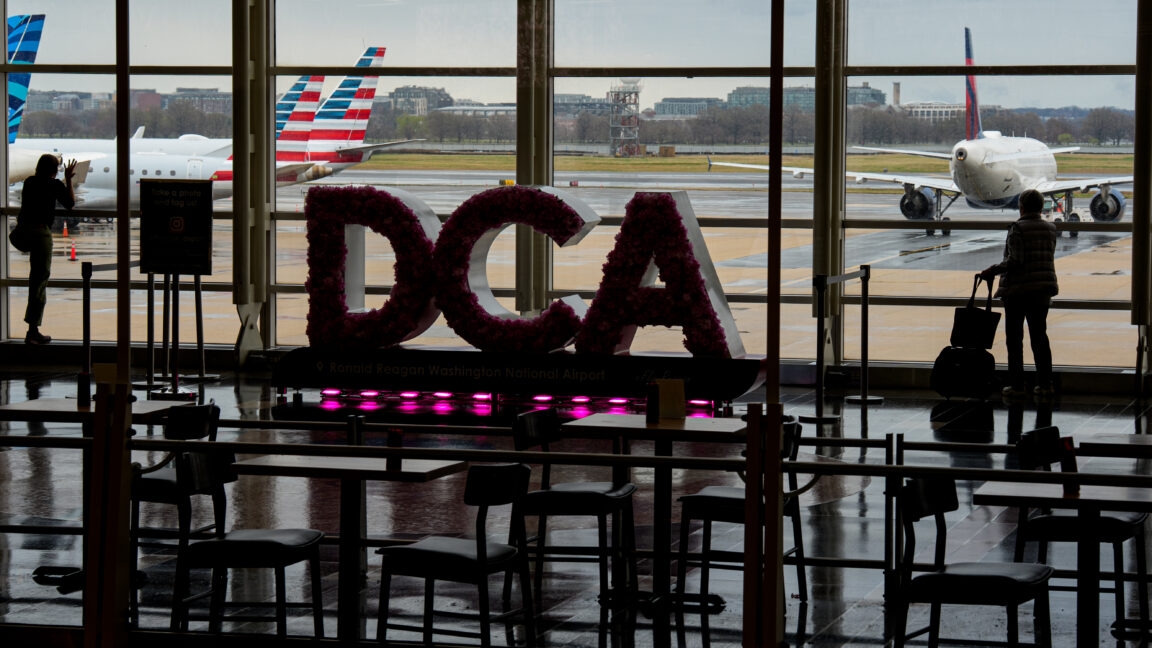
The Federal Aviation Administration is preparing to flip the switch on its first major artificial intelligence tool for air traffic management. Starting as early as Monday, September 21, the SMART system will begin advising controllers in the congested skies above Washington, DC. This isn’t a full automation overhaul. It is a targeted pilot program covering the region’s three major airports. If it holds up under pressure, the FAA plans to expand the technology across all 29 million square miles of US national airspace. The stakes are high. This marks the agency’s first serious step into predictive AI for live operations.
SMART works by crunching massive datasets to predict traffic flows and spot conflicts before they happen. It factors in airline schedules, real-time weather, airport capacity, and current airspace conditions. The goal is simple but ambitious: give the FAA, airlines, and operators a single shared view of reality. When everyone looks at the same data, they can agree on efficient routes and departure times faster. Philip Mann, a former FAA official with 17 years of experience, called the limited launch the “right call.” He noted that while individual predictions might be safe, a national-scale AI system carries “more unknowns than anything the FAA has fielded.” Shrinking the scope shrinks the risk.
Getting here wasn’t smooth. Industry confusion ran deep for weeks. According to Politico, airline officials were uneasy about how the tool would change their daily workflows. Anxiety only subsided after the FAA clarified that SMART would not alter existing procedures for controllers or carriers. Instead, it serves up “alternative route information” through systems they already use. No new buttons to push. No radical workflow shifts. Just better data. This distinction matters because trust is fragile in aviation. Operators need to know the AI is a support tool, not a replacement for human judgment.
If successful, SMART could significantly cut fuel burn and improve on-time performance. It aims to speed up recovery from weather delays and congestion events that currently ripple through the network. But the real test is whether human controllers will actually rely on these suggestions when the pressure is on. Algorithms can suggest optimal paths, but pilots and controllers deal with split-second realities that models might miss. The DC trial will reveal if this technology can truly bridge the gap between theoretical efficiency and operational chaos.

