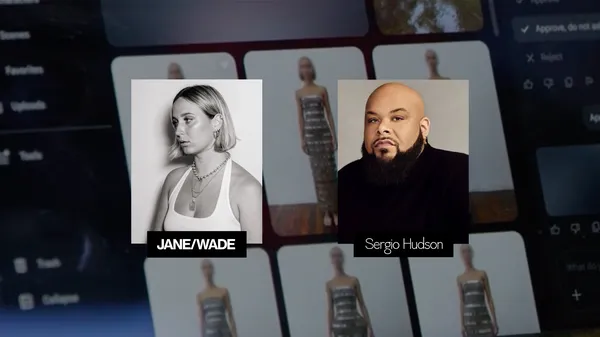
Ask any independent designer how they spend their week, and you won’t hear much about sketching. The reality is a grind of vendor calls, factory logistics, and administrative chaos. Google’s Envisioning Studio decided to fix this bottleneck ahead of New York Fashion Week. Instead of launching another generic image generator, engineers partnered directly with designers Jane Wade and Sergio Hudson. They built bespoke tools inside Google Flow to tackle specific, painful friction points in the production cycle.
Wade’s challenge was styling efficiency. Her team typically burns three full days on in-person castings and fittings just to balance head-to-toe looks. The co-created Styling Suite changed that dynamic entirely. It allowed her to curate hair, makeup, accessories, and garments on digital models instantly. She could spot missing elements or clashing textures before a single piece of fabric was cut. This shift from physical trial-and-error to virtual precision doesn’t just save time; it reduces material waste significantly.
Sergio Hudson faced a different beast: budget constraints for his runway show. Traditional 3D renderings for set changes are expensive and slow. Every tweak to lighting or props used to mean new costs and delays. His custom Runway Visualization tool simulated the venue in real-time. He swapped lighting schemes and adjusted model paths without paying for additional renders. The result was a polished show that stayed strictly within financial limits. This isn’t about AI replacing creativity. It’s about removing the administrative tax that stifles it.
Most fashion AI projects remain stuck in theoretical pilots. Google’s approach here proves that value comes from solving boring, operational problems rather than just generating pretty pictures. By letting designers describe their needs in natural language, Google Flow removes the coding barrier. The industry has enough hype. What it needs are tools that let creators stay in the driver’s seat while the machines handle the logistics.


