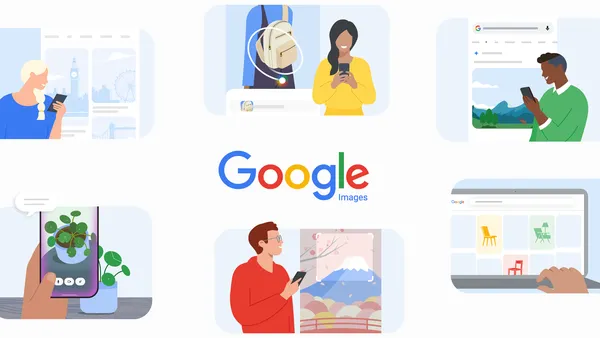
Google Images is turning 25, and rather than just looking back at Jennifer Lopez’s famous green dress, the company is launching two features that push visual search far beyond text links. The first is a new browseable homepage on desktop that serves up a real-time, personalized gallery of images from across the web. It learns your interests and lets you save ideas into collections that sit as tabs above the main feed — essentially turning image search into an infinite, curated inspiration board. This is rolling out in the U.S. in English over the coming weeks, and you’ll need to be signed into your Google Account to see it.
But the more technically ambitious update is direct image generation inside AI Overviews. Google is baking its latest Nano Banana model directly into Search, letting you prompt for a custom visual from scratch. If the perfect image doesn’t exist on the web, Search will now just make it for you. This feature hits all regions that already support image creation in AI Mode, also in English, and blurs the line between finding content and manufacturing it.
To frame these launches, Google published a timeline of its visual search history that’s genuinely useful for understanding how we got here. It stretches from the 2001 launch of Google Images itself — sparked by the web’s obsession with a certain Versace dress — through Similar Images in 2009, Search by Image in 2011, and the camera-powered Lens in 2018. The more recent entries show an acceleration toward multimodality: Multisearch in 2022 let you combine text and image queries, Circle to Search arrived in 2024 and now lives on over 580 million Android devices, and this year’s Lens + AI Mode uses a “visual image fan-out” technique that apparently breaks a single image search into dozens of sub-queries for deeper context.
I’m most curious about how users will react to AI-generated images sitting alongside organic web results. Google didn’t detail how these synthetic visuals will be labeled, and that watermarking decision matters enormously for information literacy. The Search Live feature also mentioned in the timeline — where you share your phone’s live camera feed for an interactive voice conversation — suggests Google sees the camera as a real-time query interface, not just a capture tool. That’s a massive shift in how we’ll retrieve information, and it raises questions about what “searching” even means anymore when the machine is both finding and fabricating the answer.