If you’re training or running inference on large models, you already know the pain. The step time that should be dominated by raw compute is instead eaten alive by communication overhead. Memory movement, not FLOPS, is the silent killer of cluster efficiency. AWS’s latest hardware announcement doesn’t solve this—it just reframes it with a new generation of instances that offer more of everything, which, paradoxically, makes the orchestration problem harder.
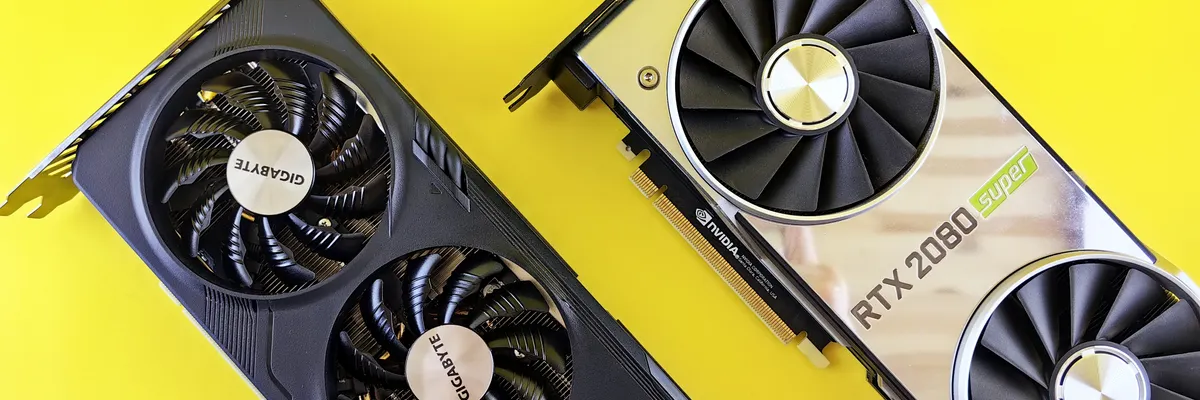
AWS is rolling out its P6 instance family, featuring NVIDIA’s Blackwell B200 and the upcoming Blackwell Ultra B300 architectures. The spec sheet is predictably monstrous. The P5 family already packs eight H100 GPUs into a single p5.48xlarge node, with H200 variants available for the memory-obsessed. The new B200-based instances double down on the same three pillars: peak Tensor throughput, high-bandwidth memory (HBM) capacity, and interconnect bandwidth. The raw numbers are dense, measured in petaFLOPS for FP8 operations and terabytes per second of memory bandwidth. But the blog post from AWS is remarkably candid about what matters: step time is “often dominated by collective communication and memory movement rather than raw compute throughput.” That’s a polite way of saying your expensive GPUs are frequently idle, waiting for data.
The real story here isn’t the silicon—it’s the plumbing. The architecture AWS diagrams splits GPU communication into two regimes: scale-up via NVLink and NVSwitch within a node, and scale-out across a network fabric. NVLink is the high-bandwidth, low-latency lifeline that stops an 8-GPU node from descending into chaos during an all-reduce operation. It’s the only thing preventing the host networking stack from becoming a bottleneck for intra-node collective operations. Once you cross the node boundary, you’re in a different world of latency and bandwidth constraints, which is where the open-source orchestration layer—typically Slurm or Kubernetes—has to make brutally efficient scheduling decisions.
This is a preview of a series that will dissect the full stack, from the physical interconnects up through PyTorch, JAX, Prometheus, and Grafana. The signal to ML engineers is clear: provisioning the latest P6 instance is the easy part. The bottleneck has shifted decisively to the integration points between the hardware and the OSS tooling that manages it. If your observability stack can’t pinpoint a pathology in a collective communication pattern, you’re just staring at a very expensive, very underutilized cluster of Blackwell GPUs.