Data center developers are on track to burn through $4 trillion by decade’s end, and they’re already fighting over power and politics before they even break ground. But Relativity Networks, which just announced $22 million in SAFE note funding led by Rhapsody Venture Partners, Bell Ventures, and Faster Than Glass, is betting the next bottleneck isn’t electricity or land — it’s the speed of light through glass.
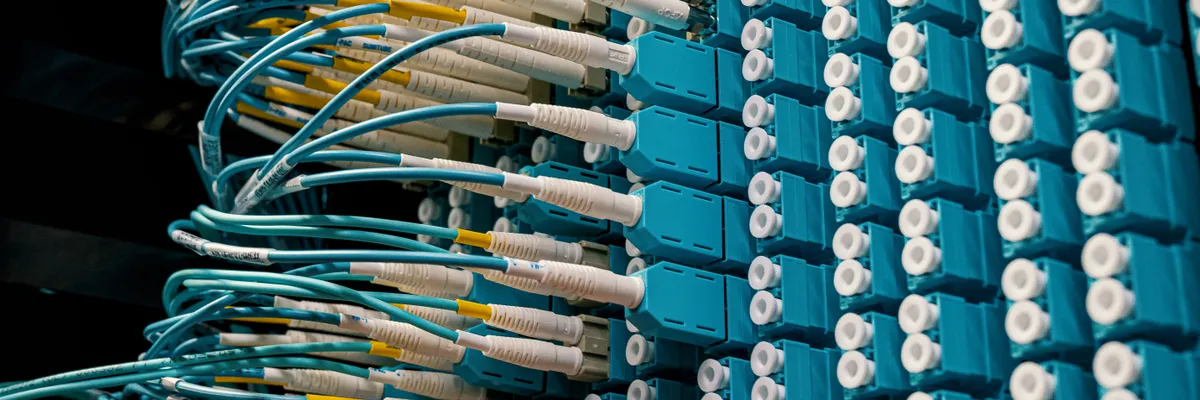
The company makes hollow-core fiber, a rarely deployed alternative to traditional fiber-optic cable. Instead of pushing light through glass, hollow-core fiber sends it through a vacuum chamber running down the center of the line. The result: data moves roughly 30% faster. CEO Jason Eisenholz puts the numbers in perspective. A signal takes about five microseconds to travel one kilometer in conventional fiber. In hollow-core, that drops to three and a half microseconds.
That microsecond difference didn’t matter when AI compute lived in a single rack. But modern data center campuses sprawl across hundreds of acres and dozens of buildings. Hyperscalers are increasingly stitching together multiple pre-existing campuses to operate as one synchronized machine — often because that’s where the available power already is. “The largest systems are distributing the compute across multiple campuses to reach the power that exists,” Eisenholz told TechCrunch. “They’re moving to where the warm shell is, but they still need to operate as one synchronized machine.”
The company also locked in a $40 million follow-on order from an unnamed hyperscaler, which suggests at least one major player sees this as more than a science project. Eisenholz frames the moment in generational terms: the first era of AI optimized for compute, the second optimized in-data center networking, and “the third era that we see coming is optimizing the geography.” That geography play matters because a 30% latency reduction effectively means developers can stretch campus footprints 30% farther before latency becomes a dealbreaker — expanding the map of viable build sites at a moment when power availability is the real gatekeeper.