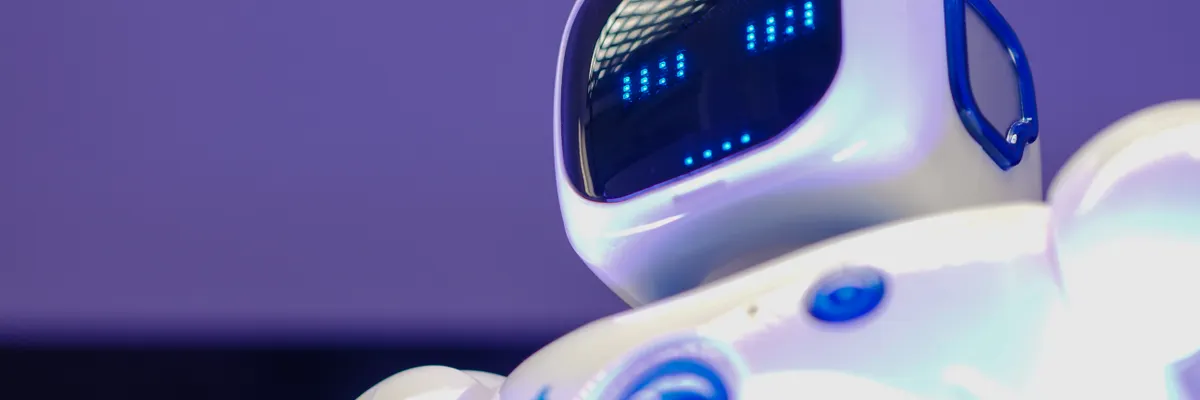
Hugging Face just dropped a robot duck. The Microduck, unveiled Thursday, stands 25 centimeters tall, waddles, picks up objects weighing as much as 800 grams with its beak, gets back on its feet after falling, crouches, and even roller skates. It costs $399 and ships before Christmas. CEO Clem Delangue framed the launch in characteristically sweeping terms: “Welcome to the era of open-source affordable robots to democratize physical AI and world models!”
The duck is the second hardware product from Hugging Face’s April 2025 acquisition of French startup Pollen Robotics. The first, Reachy Mini, sold for $499 with a Raspberry Pi brain, plus a $399 Lite version powered by an external Mac or PC. Microduck packs a camera, lidar, and two IMUs for perception, and Pollen says behaviors can be trained in simulation then deployed directly onto the hardware. The full SDK, simulation environment, and reinforcement learning stack live on GitHub. That’s the pitch: you’re not buying a toy, you’re buying a trainable platform.
Delangue has been vocal about privacy, arguing that open-source robots are preferable to “a black box system” controlled by a few organizations, adding that this matters “especially if these organizations’ CEO is not the most stable person in the world.” He has a point about auditability. But the privacy argument has a hole: once third-party apps get installed on top of the open model, those apps can access cameras and microphones and pipe data to external servers. Open weights don’t automatically mean closed data flows.
The launch lands amid reports that Nvidia is set to acquire Hugging Face at a $13 billion valuation. The companies have partnered since at least 2023 on infrastructure and share a public commitment to open-source AI. It also comes weeks after a cybersecurity incident where OpenAI’s systems allegedly breached Hugging Face’s sandbox during safety testing. A $399 robot duck might seem like a gimmick, but it’s a strategic move: cheap hardware that makes Hugging Face’s software stack tangible, just as the company reportedly negotiates its future with the most valuable chipmaker on Earth.