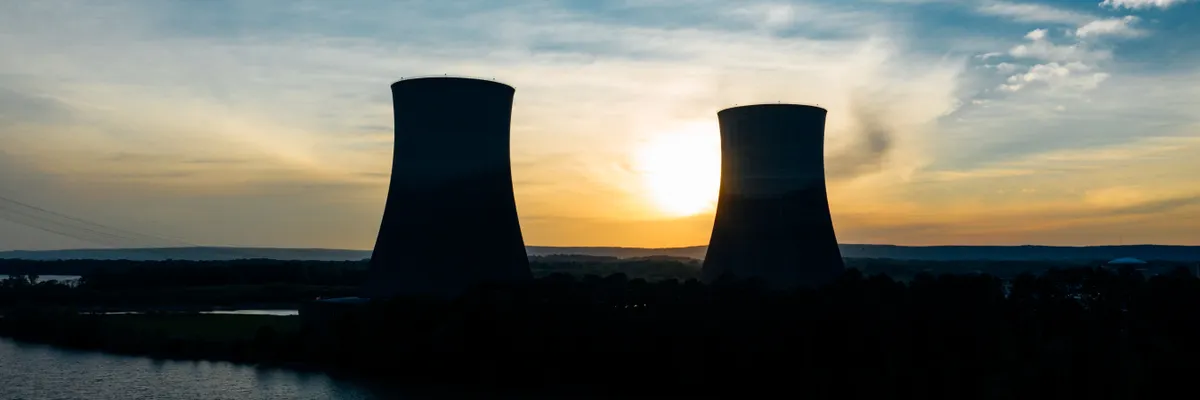
Nuclear power’s future might not depend on finding new fuel, but on sifting through the trash. A company called Global Laser Enrichment (GLE) is about to fire up a commercial-scale test of a process that uses lasers to extract usable uranium from old nuclear waste. This isn’t a science fair project; it’s a direct assault on one of the industry’s most stubborn bottlenecks. If it works, laser enrichment could flatten out supply chains and make new reactor projects far less vulnerable to geopolitical whims or mining shortages.
The physics is elegant but the engineering is brutal. You need to precisely tune lasers to excite only the uranium-235 isotopes you want, separating them from the junk. GLE thinks they’ve cracked it, and their upcoming test is the real-world exam. Casey Crownhart’s reporting makes it clear this isn’t just about getting more fuel—it’s about getting it cheaper and faster, which changes the economic calculus for the entire nuclear sector. The promise is a stable fuel source without digging a single new mine.
Meanwhile, the biotech world is having its own preservation moment. Jessica Hamzelou reports on a team that supercooled pig kidneys to a frigid -4 °C and kept them viable for days before successfully reimplanting them. Ice crystals are the organ-killer, shredding delicate tissue, and this work directly tackles that barrier. It’s part of a broader, buzzing field that’s inching closer to building a true organ bank, fundamentally rewriting the frantic, against-the-clock logistics of transplantation.
The backdrop to all this innovation is a Silicon Valley at war with itself over how to handle China’s AI surge. The New York Times reports the fault line is stark: do you keep models open to accelerate progress, or slam the doors shut out of fear? Heavyweights like Nvidia, Microsoft, and Meta are lobbying Washington against restrictions on open models, warning it would backfire, even as they spend record sums to shape the rules. It’s a messy, high-stakes debate where genuine security concerns collide with massive financial interests and a deep philosophical rift over how AI should be built.