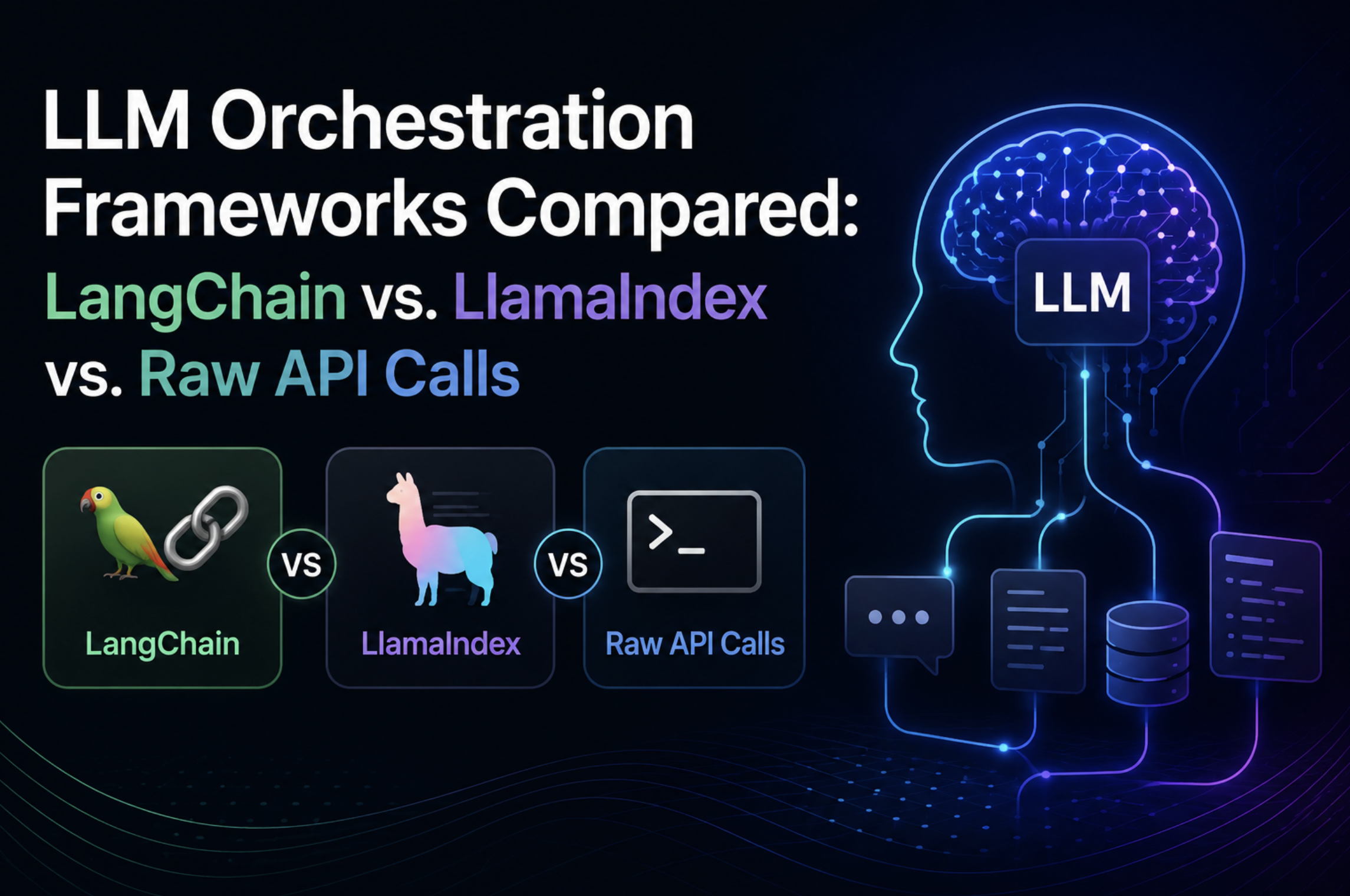
You start with a single client.chat.completions.create() call that works perfectly. Then reality hits. Your application needs memory, document retrieval, or tool use, and suddenly you’re staring down the first architectural decision that will define your project’s costs for months to come. Three paths exist: LangChain, LlamaIndex, or a thin wrapper on the raw API. Getting this choice wrong doesn’t break your prototype. It breaks your production system six months later when you’re debugging 40-frame stack traces or paying 2.7x what you should on token costs.
LLM API spending exploded from $3.5 billion to $8.4 billion between late 2024 and mid-2025. The framework layer sitting between your application and the model directly determines how much of that budget does useful work versus paying for abstraction you never needed.
LangChain, launched in October 2022, is an orchestration toolkit — 119K GitHub stars and 500+ integrations strong. Its new LangGraph package models agent workflows as directed graphs with typed state objects and built-in persistence. LlamaIndex began as GPT Index and solves a different problem entirely: making LLMs reason over your own data through ingestion, chunking, embedding, and retrieval. It’s got 44K stars and 300+ data connectors. Raw API calls aren’t the primitive fallback they’re often painted as. Production teams are increasingly migrating back to direct SDK usage for workloads where framework complexity stopped justifying itself.
These three options don’t actually compete on the same dimension. LangChain orchestrates steps. LlamaIndex optimizes retrieval. Raw calls represent a philosophy on how much abstraction you genuinely need. Many production systems use two together. The only question worth asking: given what you’re actually building, which layer earns its cost?