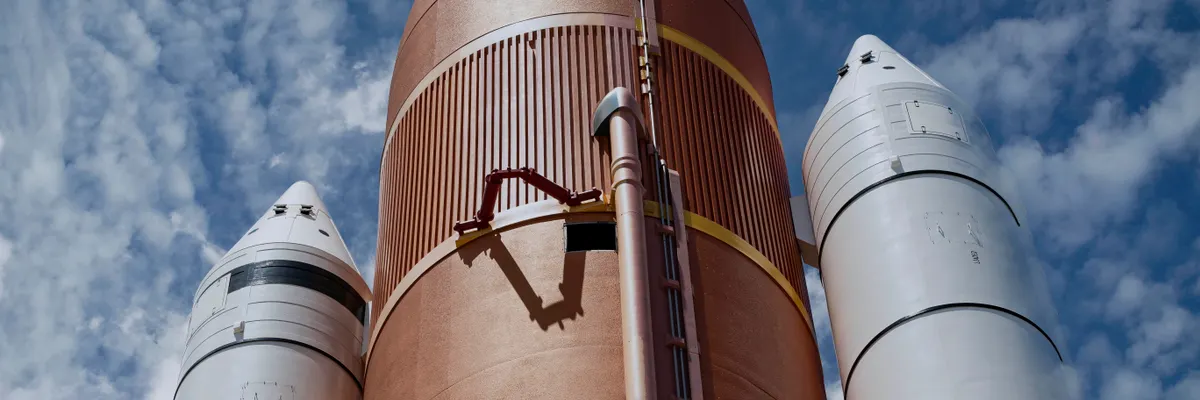
That $3.2 billion space telescope launching in August to hunt for dark energy? Turns out it’s also a surprisingly capable asteroid spotter, and not by accident — by design necessity after the Trump administration threatened its funding again last summer.
Bryan Holler, a researcher at the Space Telescope Science Institute, watched the budget ax hovering and got pragmatic. His colleague Rick Cosentino told him flat out in July 2025: show lawmakers what Roman can do for planetary defense. So Holler and a multi-institutional team started digging into the telescope’s specs. What they found is a 300-megapixel infrared camera with a field of view 100 times larger than Hubble’s — hardware that can spot asteroids as small as 60 feet across. That’s Chelyabinsk-class. The rock that exploded over Russia in 2013 packed 500,000 tons of TNT and sent 1,500 people to hospitals.
There’s a catch, and it’s a software problem. Roman was built to ignore the solar system. Its systems are programmed to discard streaks — cosmic rays, glitches, and yes, asteroids — to keep those deep-space galaxy surveys clean. Andy Rivkin, a planetary defense researcher at Johns Hopkins Applied Physics Laboratory, says astronomers would need to go in and manually sift through those discarded streaks to identify the ones that matter. It’s doable, but it’s not automatic.
Where Roman really shines is in complementing JWST. The Webb telescope can stare intensely at a single threatening asteroid — it proved that last year tracking 2024 YR4, briefly the most dangerous asteroid ever found. But Roman can scan the field. “Roman can provide infrared observations of more asteroids than JWST could hope to observe in a reasonable amount of observing time,” Holler says. That speed matters because we’re still missing more than half the 25,000 near-Earth asteroids 460 feet or larger — the ones that could erase a city. Among the 165-foot class, less than 10 percent have been located. Roman might help close that gap faster than anything else in orbit.