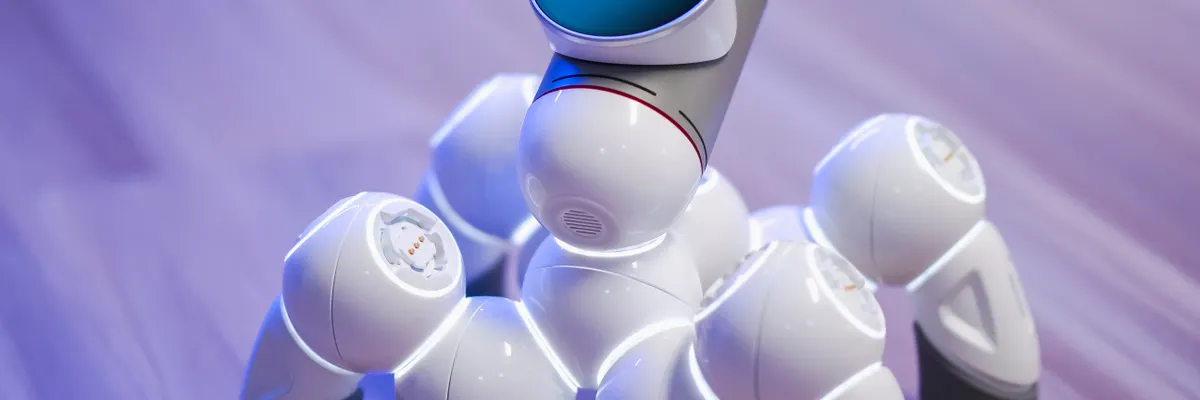
If you’ve been coasting on the easy-mode benchmarks of standard reinforcement learning environments, it’s time to wake up. A team from OpenAI just dropped a technical report that doesn’t just introduce new tasks—it essentially dares the research community to solve them. They’ve integrated a suite of challenging continuous control tasks into OpenAI Gym, replacing abstract simulations with real-world robotics hardware from Fetch and Shadow Robot. We’re talking about a Fetch robotic arm learning to push, slide, and pick-and-place objects, alongside a Shadow Dexterous Hand that needs to manipulate objects in its palm. The kicker? All tasks use sparse binary rewards, meaning the agent gets a single ‘yes’ or ‘no’ only upon achieving the goal. No dense reward breadcrumbs to follow.
Matthias Plappert, Marcin Andrychowicz, and a host of other co-authors aren’t just providing a new sandbox; they’re explicitly framing this within a Multi-Goal RL setup. An agent doesn’t just learn one trick—it receives an additional input specifying the target it needs to hit. This forces a level of generalization that single-goal environments conveniently sidestep. It’s a much harder problem, but it’s also a lot closer to how we’d actually need robots to behave in a messy, unpredictable world.
The report’s second act is a direct call for algorithmic innovation. The authors lay out concrete research ideas, many orbiting around their own prior work on Hindsight Experience Replay (HER). The beauty of HER is that even a failure can be re-framed as a success for a different, unintended goal, allowing the agent to learn from sparse rewards without any expert demonstrations. The new environments are practically built to stress-test this approach and expose its limits, pushing for new methods that can learn efficiently when the reward signal is almost always silent.
What makes this genuinely important, beyond the benchmark itself, is the hardware grounding. These aren’t abstract point-masses floating in a void; the tasks have the physical constraints of the Fetch robot and the stunningly complex 24-joint Shadow Hand. Solving these tasks would signal a leap from academic curiosity to something with real dexterity. The gauntlet has been thrown, the code is integrated into Gym, and now the real work begins—finding algorithms that can finally give these virtual robots a clue.