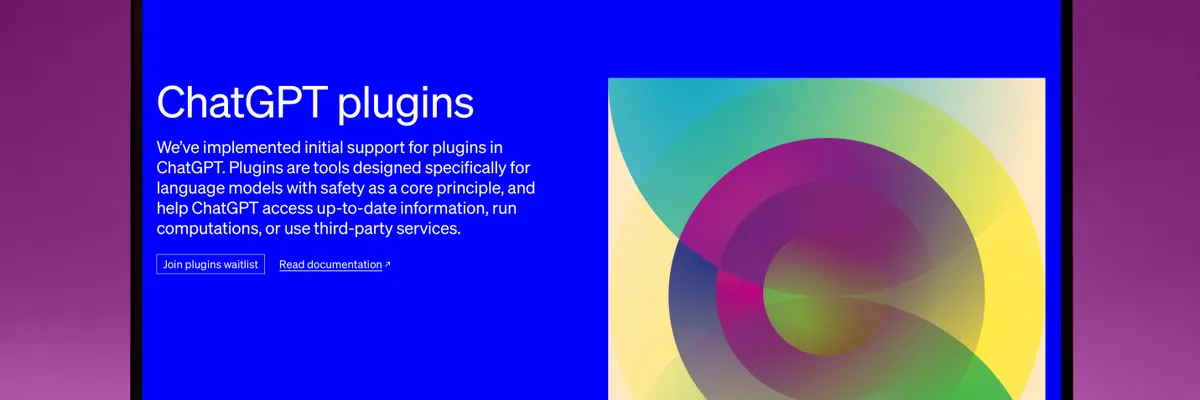
OpenAI is finally opening ChatGPT to the outside world, announcing the gradual rollout of plugins that let the language model tap into live data and third-party services. The move is a direct answer to one of the loudest user complaints since launch: the model’s knowledge cutoff. “The only information they can learn from is their training data,” the company stated, calling plugins the “eyes and ears” for language models. It’s a frank admission of the core limitation, and the fix is a big deal. This isn’t just a search engine bolted on; the initial batch of partners includes Expedia, Instacart, Klarna, Shopify, and Slack, pointing toward a future where ChatGPT becomes a transactional hub, not just a chatbot.
The launch partners read like a who’s who of web services. Kayak and OpenTable are there for travel and dining, while Wolfram brings computational heft for math and science queries. Zapier’s inclusion signals a push toward automating work across thousands of apps. Alongside these, OpenAI is hosting two plugins itself: a web browser to fetch fresh information and a code interpreter that lets the model run computations. They’ve also open-sourced code for a knowledge base retrieval plugin, so any developer can point ChatGPT at a custom set of documents. The play is clearly to position ChatGPT as a platform, mirroring how the App Store transformed the iPhone.
Safety, of course, is the elephant in the room. OpenAI explicitly warns that connecting models to external tools introduces “significant new risks.” The company’s iterative deployment philosophy is on full display here—access starts with a small set of ChatGPT Plus subscribers and invited developers, and they’ll study real-world use before any wider launch. The goal is to use plugins to combat hallucinations by grounding responses in evidence-based references, letting users actually verify where an answer came from. It’s a pragmatic trade-off: more utility in exchange for a broader attack surface to defend.
For the hundreds of developers who have been building unofficial plugins in a kind of shadow ecosystem, this is validation. It also puts them on notice. OpenAI mentions they expect open standards to emerge for AI-facing interfaces, and they’re already floating an early attempt at one. The subtext? If you want your tool inside the conversation, you’ll likely be building on their terms. The coming months, as this protocol gets battle-tested, will reveal whether ChatGPT evolves into the universal front-end for everything, or buckles under the weight of its new responsibilities.