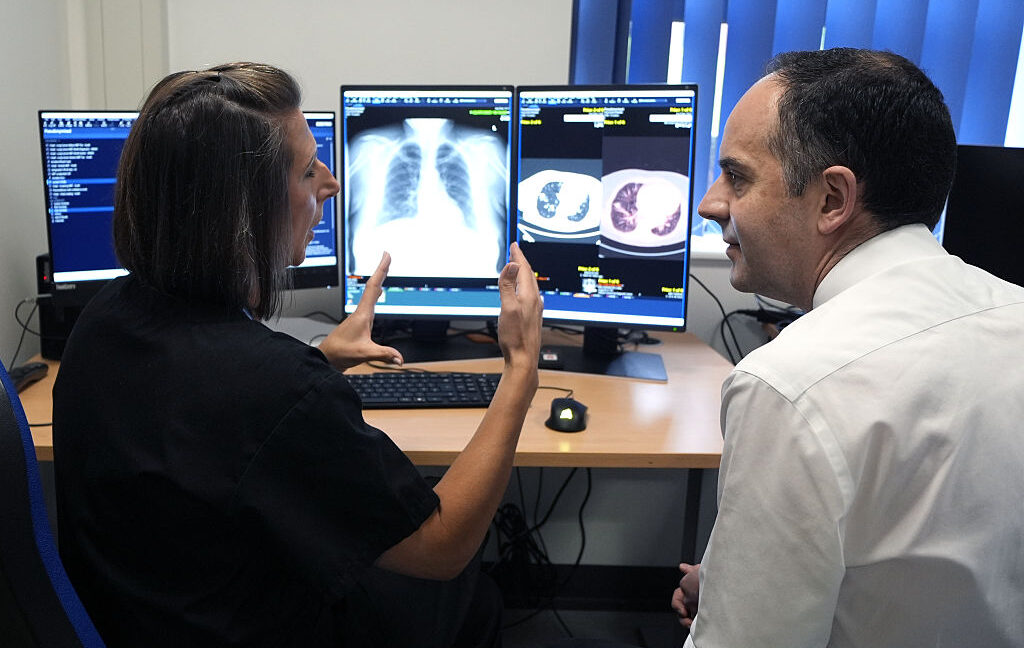
Geoffrey Hinton’s 2016 prediction that radiologists would be obsolete within five years hasn’t aged well. The field is growing, with practitioner numbers projected to rise 26 percent or more over the next three decades. But dismissing Hinton entirely misses what he got right: AI systems now routinely match or beat human radiologists on specific diagnostic tasks.
Radiology has become medicine’s undisputed AI proving ground. As of early 2026, roughly three-quarters of the 1,400 AI-enabled medical devices cleared by the FDA target radiology applications. Some tools handle administrative work — drafting reports, flagging urgent scans. Others do something more consequential: spotting abnormalities human eyes can’t see. One analysis of 43 clinical trials found AI-assisted colonoscopies detect more polyps than conventional procedures.
The stakes aren’t academic. Human error rates on diagnostic imaging run between 3 and 5 percent, which translates to about 40 million mistakes globally every year. That’s not a rounding error. It’s a public health problem.
Yet the real story ten years after Hinton’s headline-grabbing claim isn’t humans versus machines. It’s how to fuse AI’s precision with human judgment and flexibility. Hinton framed it as a zero-sum contest. The evidence suggests something messier and more interesting: a hybrid model where radiologists increasingly supervise and collaborate with systems that extend their capabilities rather than replace them. Whether that partnership actually improves patient outcomes at scale remains the open question that matters.


