Building a prototype is the easy part. Keeping it alive in production is where most enterprise AI projects die. Salesforce argues that the initial build represents merely 10% of the effort, while the remaining 90% involves relentless evaluation, regression testing, and optimization. Their new Agentforce platform aims to solve this operational marathon by wrapping generative models in strict guardrails and deep data integration. It is not just another chatbot wrapper; it is an attempt to turn unpredictable LLMs into reliable execution engines for mission-critical workflows.
The platform’s strength lies in its tooling rather than just its model access. Agentforce integrates directly with Salesforce Data Cloud, using the Model Context Protocol to connect external endpoints. Developers get a Testing Center that auto-generates synthetic edge cases, allowing them to run regressions headlessly within CI/CD pipelines like Claude Code or Cursor. Perhaps more critically, the Agent Optimizer monitors live traffic to identify friction points, feeding prompt-tuning recommendations back into the builder. This closes the loop between deployment and improvement, moving away from the “ship it and pray” mentality that plagues many AI launches.
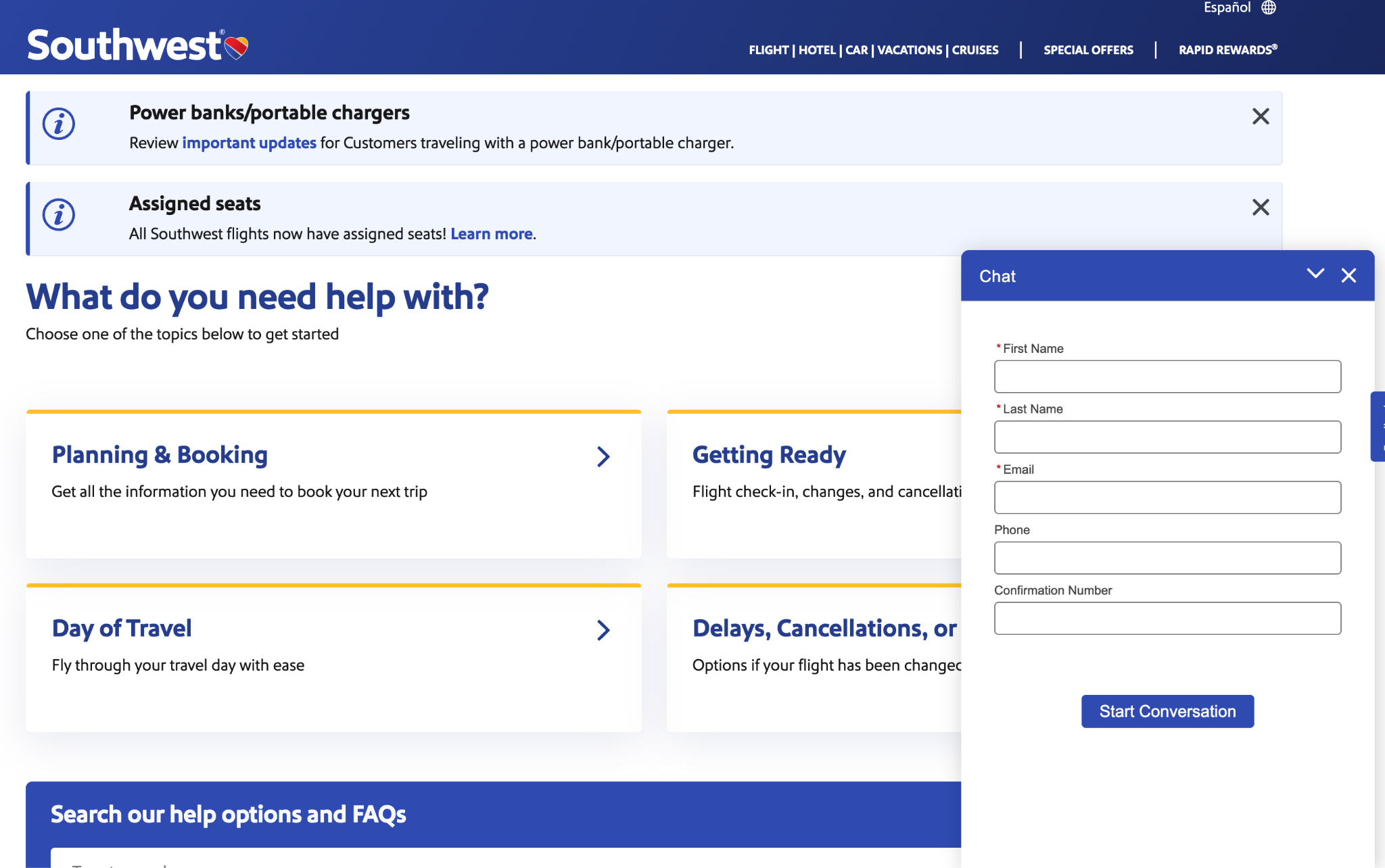
Southwest Airlines provides the first major proof point. Facing over 20 million annual inquiries, the carrier deployed Agentforce in November 2025 to handle baggage policies and flight disruptions. The results were stark: a 45% autonomous resolution rate across two million interactions and a projected $6 million in annual operational savings. Crucially, they implemented deterministic hard stops. If a user triggers a safety warning or legal dispute, the system bypasses the LLM entirely, escalating to human specialists with full context. This hybrid approach preserved trust while automating the mundane.
This shift signals that the era of text-only chatbots is ending. Agentforce renders dynamic UI components—like seat maps or payment interfaces—directly into the conversation, adapting behavior to the channel. For technical builders, the lesson is clear: probabilistic natural language processing must be fused with deterministic rules. You cannot let an LLM guess when charging a credit card. As agents become more autonomous, the value shifts from prompt engineering to robust observability and strict gating logic.


