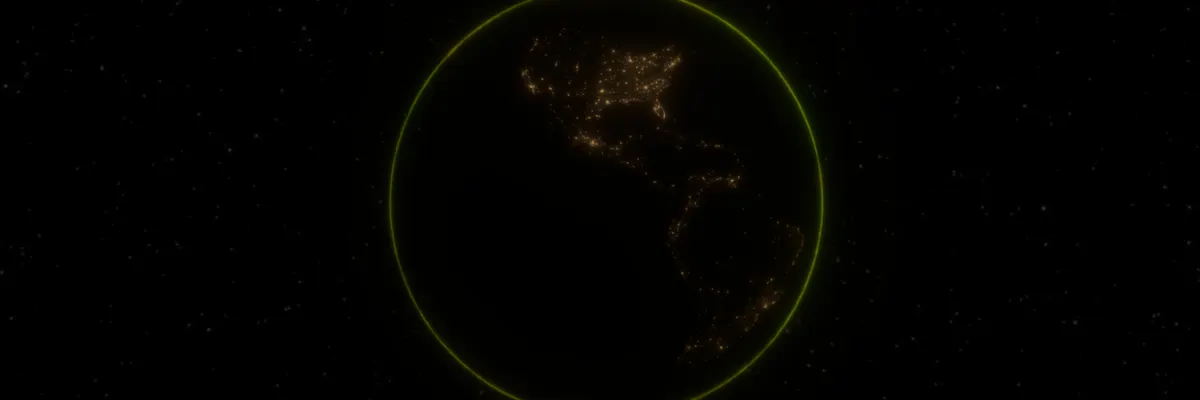
Reflect Orbital wants to sell sunlight on demand. The plan: launch satellites carrying enormous mirrors into orbit, then angle them to beam sunshine down to Earth for solar panel charging, emergency response, or military operations. A test satellite with an 18-by-18-meter mirror goes up later this year, and the long-term vision involves up to 50,000 of these things. Sounds ambitious. It also sounds like an astronomer’s nightmare.
New research suggests the reflected beams could shine as bright as 10,000 full moons and scatter light across tens of kilometers. That’s not a subtle glow on the horizon. That’s a second sun showing up wherever the company points it, and the spillover could hit people who never asked for it. Dark-sky advocates, wildlife researchers, and aviation safety experts are all raising flags. Birds navigate by starlight. Pilots need to see. And anyone who’s ever tried to photograph the Milky Way knows how fragile darkness really is.
The pushback mirrors what we’ve seen with satellite megaconstellations like Starlink. Astronomers spent years warning that thousands of low-orbit satellites would streak through telescope images, and they were largely ignored until the problem became impossible to deny. Reflect Orbital’s mirrors take that concern to a different scale entirely. One Starlink satellite is a faint line in a long exposure. A giant space mirror is a spotlight.
Meanwhile, in the adjacent world of AI drug discovery, a different kind of credit problem is brewing. Insilico Medicine proudly announced that generative AI “discovered” a drug candidate for pulmonary fibrosis, but when it filed the patent, five humans were listed as inventors. No mention of the algorithm. The gap between marketing and legal filings exposes a tension that patent law hasn’t caught up with yet: if an AI proposes the molecule, who actually invented it? Courts have been clear that only humans can hold patents, which means companies will keep naming people no matter how much of the heavy lifting the model does. That’s workable for now. But as AI systems churn out drug candidates faster than any human team could evaluate them, the legal fiction may get harder to sustain—and the fight over what “invented” even means is just getting started.