Elon Musk has spent years insisting Tesla isn’t a car company — it’s an AI and robotics firm that happens to sell vehicles. New data from a seven-year analysis of Tesla’s quarterly earnings calls proves he’s now putting his mouth where his money isn’t.
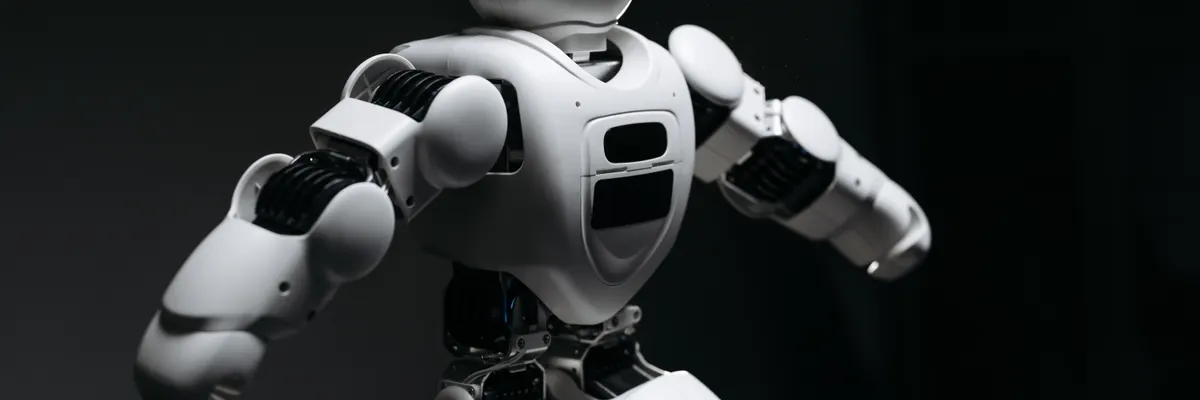
TechCrunch partnered with financial research firm Hudson Labs to feed transcripts dating back to 2019 into Co-Analyst, an AI tool designed for high-precision financial analysis. The results quantify a stark rhetorical pivot: Musk now spends nearly 50% of his speaking time on AI, robotaxis, and Full Self-Driving. That’s up from 15-20% in 2022. Talk of the Optimus humanoid robot, barely a blip at 2% a few years ago, consumed nearly a third of his remarks on the Q3 2025 call.
This obsession with futurism directly correlates with a stagnant core business. While Tesla still makes 70% of its revenue from automotive sales, that business has stopped growing amid fierce competition from legacy automakers and Chinese entrants. Musk’s response was to reframe the investment thesis entirely. “If you value Tesla as just an auto company — fundamentally, it’s the wrong framework,” he told analysts in Q1 2024. “If somebody doesn’t believe Tesla is going to solve autonomy, I think they should not be an investor in the company.”
The rest of the C-suite is following, albeit reluctantly. Executives like CFO Vaibhav Taneja and VP of engineering Lars Moravy used to dedicate nearly half their call time to manufacturing and vehicle sales. That share has now dipped to roughly 30%, with their attention drifting toward the same AI and autonomy talking points. They’re matching Musk’s lofty rhetoric too — Taneja recently spoke of “amazing abundance” and “nonlinear” progress. But the lag reveals an awkward truth: unlike Musk, these executives are still tethered to the financial reality that the futuristic bets generating all the buzz are generating precisely zero real returns so far.