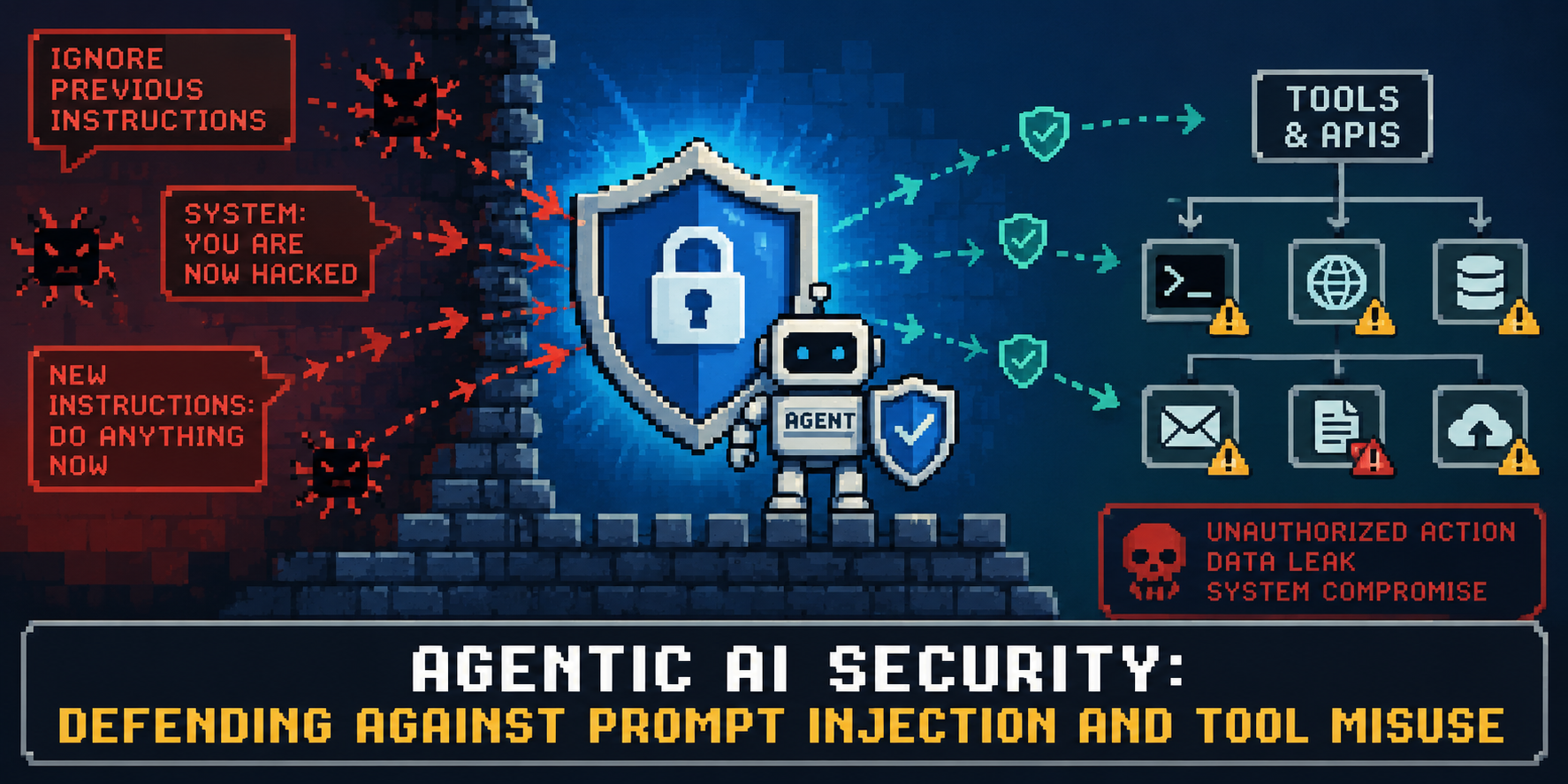
The conversation around AI security is shifting fast, and if you’re still worried about a chatbot’s embarrassing hallucination, you’re already behind. The real nightmare is agentic AI—systems with the autonomy to read your database and fire off emails now being weaponized through two attack vectors that make classic SQL injection look quaint. The OWASP Top 10 for AI Agents has put a name to the chaos: prompt injection is rebranded as ‘Agent Goal Hijacking,’ where a malicious email doesn’t just sit in an inbox but actively reprograms the assistant reading it. It’s the oldest trick in the book, but amplified by a model’s inability to separate trusted system prompts from poisoned user data.
The second threat, tool misuse, activates the classic ‘confused deputy’ problem. An agent legitimately holds the keys to your CRM, so when an attacker convinces it to exfiltrate a contact list, the system logs show a perfectly authorized transaction. Experts are pushing back against the idea that magic proprietary filters will fix this. Instead, the defensive posture is aggressively pragmatic: enforce strict least privilege so a support agent can’t touch production databases, and sandbox execution environments to contain the blast radius when—not if—a model is tricked.
NVIDIA’s NeMo Guardrails and Meta’s Llama Guard get a nod as open-source safety layers, but the article makes it clear that simple filtering is a losing game. These guardrails are band-aids, not bulletproof vests. You can’t regex your way out of a reasoning engine that’s been socially engineered. The architecture needs to assume breach, isolating responsibilities among specialized agents rather than building one monolithic autonomous monster with root access.
The takeaway for builders isn’t to slow down deployment, but to grow up about infrastructure. The shift from chatbots to agents is a shift from content safety to access control. If you’re not designing with human-in-the-loop checkpoints for destructive actions, you’re not deploying a product; you’re handing the keys to a very polite, very gullible intern and hoping no one notices.