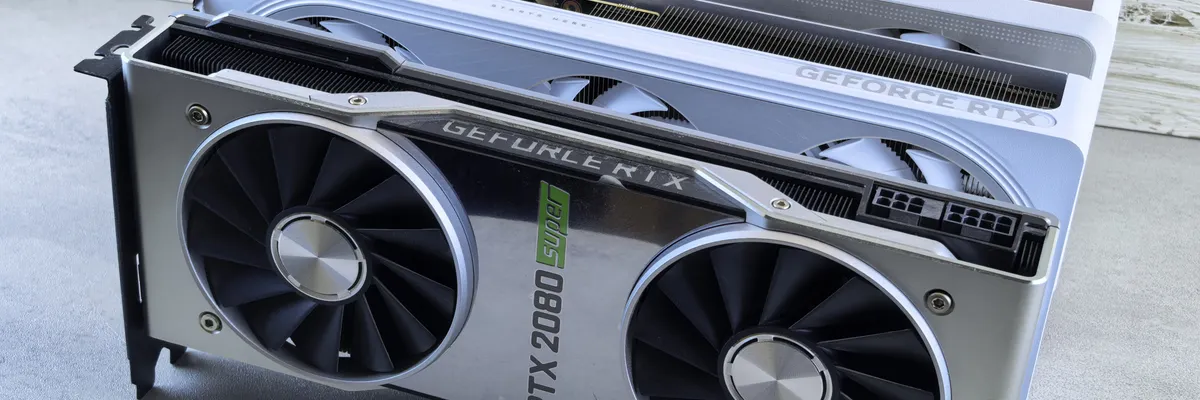
It’s a weird time to be an AI researcher at a university. That was the vibe last week at a Schmidt Sciences AI2050 convening in Mountain View, where some of the world’s most accomplished academics gathered to face a reality they’ve been living for years: the cutting edge has left the lab and moved into private companies like OpenAI and Anthropic. Universities simply can’t afford the GPU clusters needed to train frontier models, and even if they could, the companies aren’t exactly handing over the architecture specs for Claude or ChatGPT.
Nika Haghtalab, a computer science professor at UC Berkeley, captured the absurdity perfectly over lunch. She said being an AI academic today is like being a biologist in a world where private companies hold an exclusive monopoly on CRISPR. You can watch the tool work from the outside, but you can’t crack it open to study its mechanisms, let alone steer its design. The program does offer fellows funding for GPUs—a major draw, several told me—but with federal science budgets getting slashed, the cost of simply querying commercial models for rigorous study is becoming prohibitive.
So what do you do when you can’t play the scale game? You pivot to questions that won’t make a tech giant any money. Anjalie Field, a Johns Hopkins professor, told me she explicitly avoids problems that a company is likely to solve. Her recent work found that language models give less sophisticated answers to prompts phrased in ways more typical of women. That’s not the kind of result that makes a flashy product demo, and you’re unlikely to see it emerge from a lab that’s chasing enterprise contracts. A whole contingent of fellows isn’t working on LLMs at all, instead building specialized models for climate science or physical simulations—work that gets unfairly tarred by the public’s assumption that all AI is an energy-guzzling chatbot.
The brain drain is real and accelerating. Prominent academics are taking leave for industry gigs, and many fellows already hold dual appointments. Yet the mood wasn’t entirely grim. Some see the automation of pure math by models like OpenAI’s—a development that has mathematicians genuinely rattled about their professional future—as a boon rather than a threat. Tim Dettmers, a Carnegie Mellon researcher focused on making models faster and cheaper, is one of them. The real question isn’t whether academia can compete with Big Tech’s compute budgets. It’s whether the research questions that matter most to society can survive in a world where the answers aren’t profitable.

