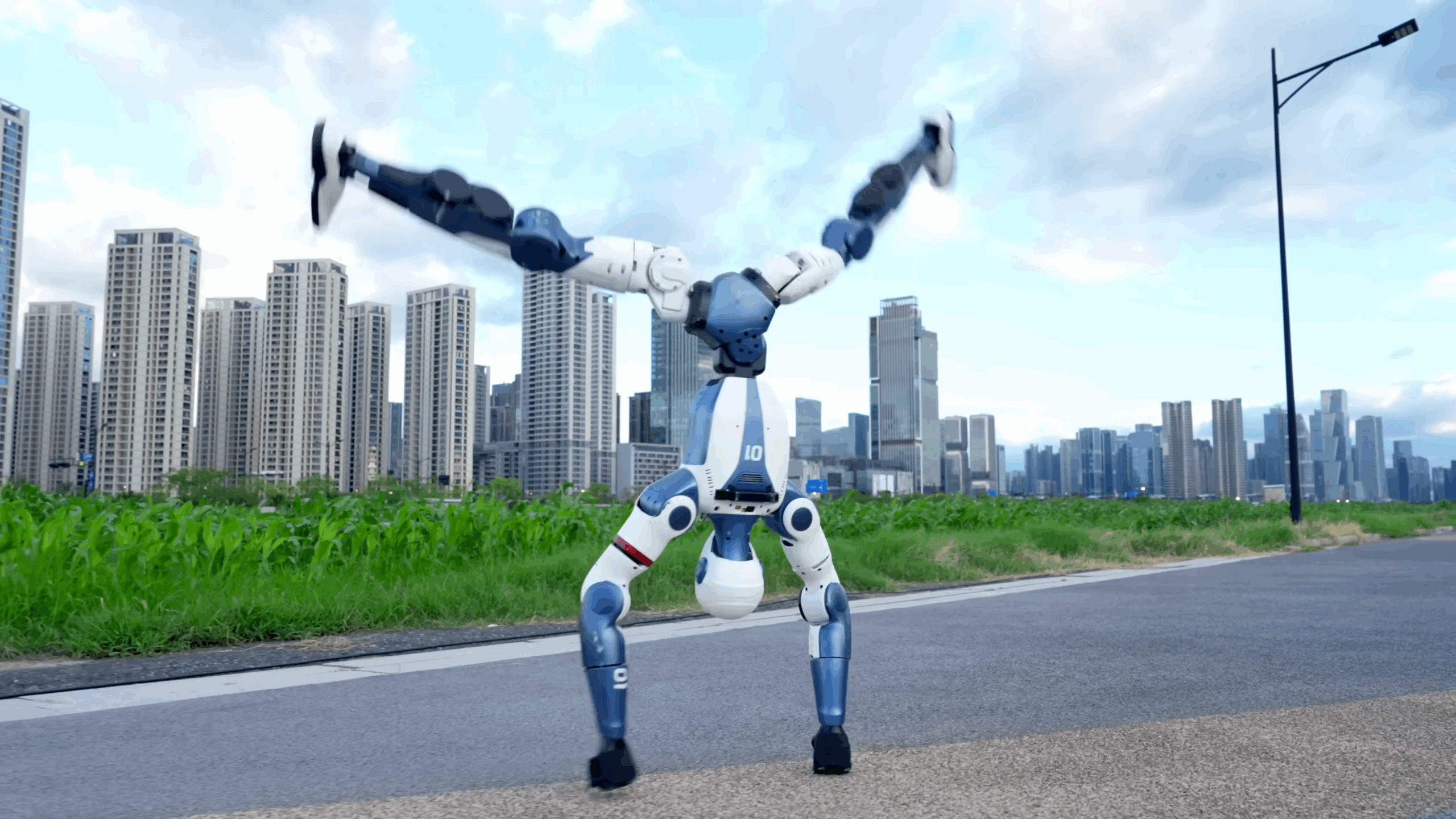
Unitree Robotics pulled off a Shanghai debut that would make any founder dizzy — the stock jumped as much as 629 percent intraday before closing up 460 percent, giving the Hangzhou-based humanoid maker a valuation around $50 billion. It raised 6.1 billion yuan, roughly $904 million, and became the first publicly traded humanoid robot company on the Chinese mainland. But a Financial Times investigation into who’s actually buying these machines tells a messier story than the share price suggests.
The demand, it turns out, is largely circular. Chinese humanoid manufacturers sell a big chunk of their robots to state-backed training centers where teleoperators teach the machines physical tasks. Those centers then sell the training data back to the manufacturers. Local governments often co-fund the centers with the companies themselves. At Unitree, nearly three-quarters of humanoid revenue in the first nine months of 2025 came from education and research. At competitor Leju, training centers accounted for 45 percent of sales of its flagship robot. By June, more than 90 such centers existed, according to Interact Analysis.
Analysts aren’t convinced the data justifies the spending. Marco Wang of Interact Analysis said the data isn’t “100 percent useful” because the robots aren’t operating in real-world settings, and one center manager claimed only two to three of every eight training hours are usable. The valuation looks stretched too: Unitree trades at 35.89 times revenue, compared with roughly 20 times for its Hong Kong-listed rivals. Vey-Sern Ling of Union Bancaire Privée put it bluntly: “There’s clearly no fundamental basis for the share price surge.”
This mirrors the criticism swirling around Nvidia’s investments in AI firms like OpenAI, where the chipmaker effectively helps fund its own customers. Jensen Huang defends the strategy as necessary to build infrastructure his company can’t create alone. Beijing seems to share that view — about 20 percent of Unitree’s IPO went to strategic investors including DeepSeek, and policymakers are pushing the sector hard. The electric vehicle playbook of state-driven demand worked once. Whether it works for robots that can’t yet hold down a real job is an open question, and early-stage investors reportedly already looking for an exit might be the first to answer it.


