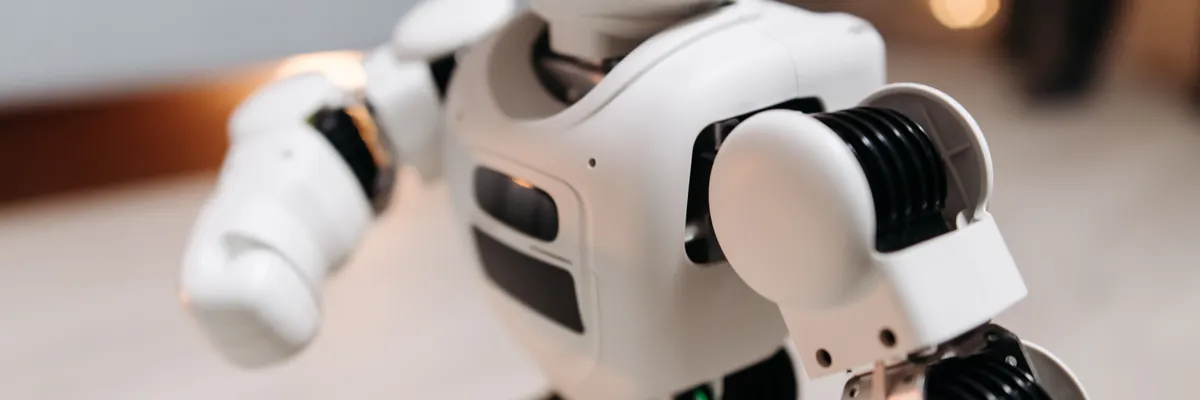
Unitree’s blockbuster debut on China’s STAR Market valued the robot maker at $66 billion, a number that seemed to confirm physical AI as venture capital’s hottest bet. Then reality set in. Within days, the stock shed nearly half its value as analysts pointed to an uncomfortable truth: the robots can walk, dance, and flip, but they still can’t reliably do work that anyone would pay for.
The gap between hardware prowess and practical competence dominated the conversation at Actuate, a physical AI developer conference that has tripled in size since 2023 and drew 1,500 attendees this year. The event’s host, Foxglove, was founded by Cruise veterans, and the autonomous vehicle pedigree runs deep through the sector. Harry Mellsop, founder of simulation startup Antioch, framed the moment bluntly: physical AI is in its “GPT-2 era.” The model exists, the potential is visible, but the leap to ChatGPT-level utility will require vastly more data, compute, and GPU capacity optimized for ray tracing to build high-fidelity training simulations.
The data problem is severe enough that one infrastructure vendor, Avala, went to market with a booth sign promising to solve “the robotics data crisis.” That crisis explains why autonomous vehicles remain the only physical AI application with real commercial traction—cars driven by humans generate training data automatically, and the core task is avoiding contact rather than manipulating objects. Wayve CEO Alex Kendall sees that as a strategic advantage. “Manipulation robotics is like self-driving five years ago,” he told TechCrunch, arguing that the tooling, simulation infrastructure, and ML ops built for vehicles will transfer directly to humanoids. Wayve and Uber have both launched humanoid R&D labs on that bet.
But the field is split on strategy. Théophile Gervet, CEO of Genesis AI—which raised a $105 million seed round this year—rejects the notion that a general-purpose “brain” can succeed without co-designed hardware. He also articulated the sector’s catch-22: “No customer cares about the general purpose robot that works at 80% success rate,” yet building for a narrow vertical now means risking obsolescence when foundational models mature. Bedrock CTO Kevin Peterson is threading that needle, starting with autonomous excavation to generate real deployment data while planning an intelligence layer that could eventually span multiple construction machines. The Unitree selloff suggests investors are starting to ask which companies are actually solving that dilemma, not just demoing their way through it.