The AI drug-discovery industry has been coasting on a flawed premise, and Vivodyne CEO Andrei Georgescu isn’t shy about saying it. “Absent human testing, what are these [AI] models going to do?” he asks. “They’re going to cure cancer in mice.” He has a point. Sam Altman, Demis Hassabis, and even Dario Amodei have all floated the idea that AI will conquer cancer or all disease—Amodei himself wrote over the weekend that such claims have become “more cliché than credible.” The receipts are thin: AlphaFold won a Nobel Prize but hasn’t produced a single approved drug, and Isomorphic Labs, the company built on it, has pushed its first trials from 2025 to late this year.
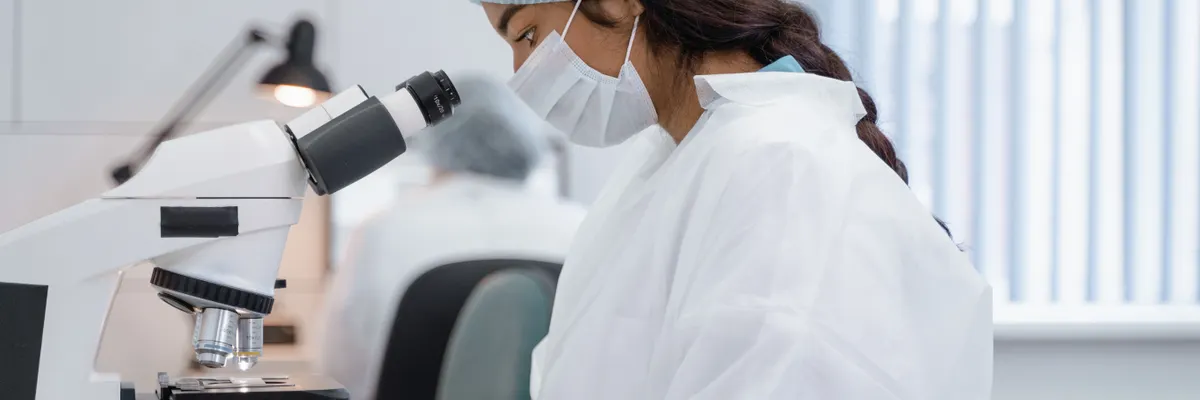
Vivodyne’s answer is HIVE, a modular robotic lab that grows 20 types of human tissue, doses them, and tracks the results autonomously. The company claims its liver tissue predicts human toxicity with 94% accuracy, its airway tissue matches real human behavior 96% of the time, and its bone marrow hit 100% concordance across 20 chemotherapy drugs. That’s the kind of causal data that static cell snapshots—what most current models train on—can’t provide.
The stakes are concrete. Roughly 90% of drugs that succeed in animal trials fail to win FDA approval for humans, and a single clinical trial can cost tens of millions of dollars. Georgescu compares the current situation to an automaker that has no idea whether its car will pass crash tests before submitting it. Vivodyne, spun out of Penn in 2021 and backed by nearly $80 million from Khosla Ventures, opened what it calls the world’s largest “human data center” outside San Francisco last week, claiming twice the throughput of all U.S. animal trials combined.
The bigger bet: those hundreds of thousands of ongoing experiments could finally provide reinforcement learning data for models that understand how a cell got to a given state, not just that it’s there. Georgescu points to a Nature Methods study from last month showing no clear scaling laws for generative models trained on existing cellular data. It’s an ambitious pitch, and one pharma partners are reportedly buying. Whether it produces better drugs than mice do remains the real test.