Voice interfaces have moved past the novelty phase. They are now the standard for customer service bots, healthcare assistants, and smart home devices. But building them requires more than just wrapping a large language model in audio code. A voice agent operates on a strict three-stage pipeline: Speech-to-Text (STT), language processing, and Text-to-Speech (TTS). Each stage introduces friction. If the STT layer mishears a word, the LLM answers the wrong question, and the TTS speaks that error aloud. These compounding errors make voice development distinctly harder than text-based chat.
Latency is the silent killer of voice UX. In a text chat, users tolerate a few seconds of loading time. In spoken conversation, that same delay feels like an awkward silence or a dropped call. Designers must strip away visual crutches like bullet points and bold text. Responses must be short, clean, and structured for the ear, not the eye. The system also needs to handle natural human behaviors like interruptions and mid-sentence corrections. A text bot waits for a submit click; a voice agent must navigate the messy reality of turn-taking.
Audio quality adds another layer of unpredictability. Background noise, accents, and microphone variance directly impact STT accuracy. A system that works flawlessly in a quiet office may fail in a noisy retail environment. This variability forces developers to think end-to-end rather than optimizing just the reasoning engine. You cannot fix a bad transcript with a smarter LLM. The entire chain must be robust.
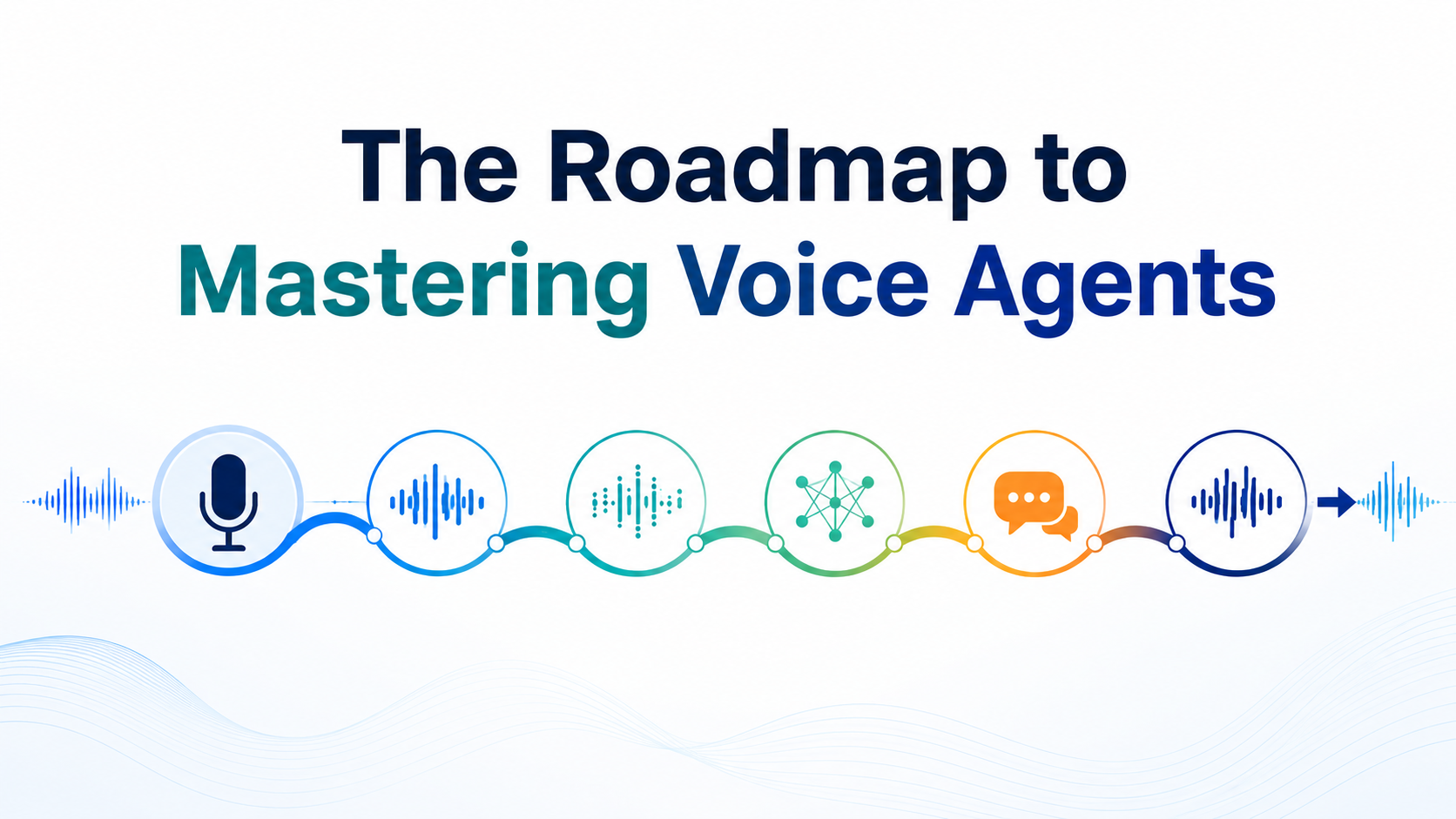
The article outlines a seven-stage roadmap to master these complexities, moving from foundational concepts to deployment. It emphasizes that voice agents are not just text agents with speakers. They are a separate discipline requiring careful attention to pacing, error handling, and real-time performance. As voice becomes the primary interface for AI, understanding these constraints will separate functional prototypes from products people actually want to use. The question isn’t if voice will dominate, but who can solve the latency problem first.