Berkeley spinout XDOF is reportedly closing a Series B at a $1.2 billion valuation, a staggering jump for a company that only emerged from stealth in June and already pulled in a $70 million Series A from Thrive Capital, Andreessen Horowitz, Lux, and Spark Capital. 8VC is leading the new round, according to people familiar with the deal, though the total capital raised and whether that valuation includes fresh funding remain unclear.
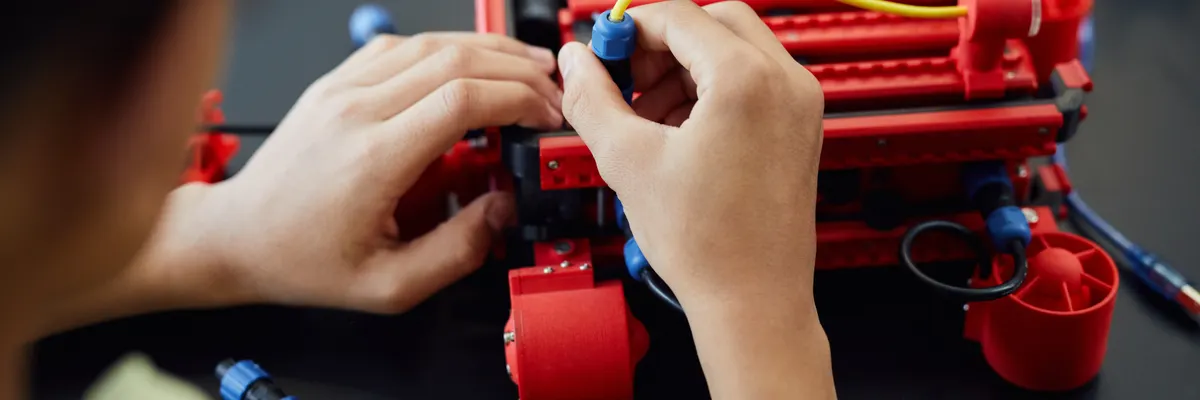
The speed here is the story. XDOF wasn’t planning to raise again so soon, but annualized revenue approaching $50 million changed the calculus. Investors came knocking. Co-founders Philipp Wu and Fred Shentu built the company on GELLO, a low-cost teleoperation system Wu developed as a UC Berkeley PhD student to solve a problem he knew firsthand: robots don’t have an internet-scale dataset to learn from. LLMs gorged on the entire web. Physical robots get nothing.
That data gap is exactly what XDOF targets. The startup builds data pipelines, collection tools, and annotation systems that frontier AI labs and robotics companies would rather outsource than build internally. Investors are already drawing comparisons to Scale AI or Mercor — the data-labeling giants that greased the AI boom — but for physical robotics. XDOF claims 20 customers, including several frontier AI labs, and is partnering with UC Berkeley’s AI Research lab to release ABC, what it calls the largest collection of high-quality robot training data ever assembled. To capture it, the company combines remote teleoperation with human collectors wearing sensors to record mundane tasks like folding clothes and flattening boxes.
A $1.2 billion valuation for a company less than two years old and barely three months past stealth is aggressive by any standard. But the underlying logic is sound: whoever controls the data supply chain for robotics controls the bottleneck. Scale AI hit a $13.8 billion valuation this year doing something similar for LLMs. XDOF is betting the physical world needs the same infrastructure. Mecka AI, Scale AI, and Micro1 are circling similar territory, which means the race to own robot training data is officially on — and it’s moving faster than anyone expected.