Most retrieval-augmented generation tutorials assume you’ll rent a GPU, spin up a hosted vector database, and pay per API call. That assumption is quietly obsolete. A standard laptop with 8 GB or 16 GB of RAM can run a complete RAG system that stays offline, costs nothing per query, and keeps sensitive documents on your own machine.
The trick is threefold. Quantization compresses model weights from 16 bits to 4 or 5 bits, cutting memory use by roughly two-thirds. A 7 billion parameter model that needs 14 GB at full precision runs in about 4 GB once quantized to GGUF format. Compact embedding models around 80 MB produce 384-dimensional vectors that handle retrieval well for most document collections. And an in-process vector store like FAISS or ChromaDB eliminates the need for a separate database server.
The package stack is surprisingly approachable. LangChain or LlamaIndex handles orchestration. llama-cpp-python runs quantized models on CPU, with Ollama as a simpler command-line alternative. sentence-transformers handles embeddings locally. pypdf or unstructured parses documents, and Streamlit wraps everything in a browser interface.
Chunking remains the make-or-break decision. The guide recommends 500 to 1000 characters with 10 to 20 percent overlap, split on paragraph breaks and section headings rather than arbitrary character counts. Metadata — filename, page number, section title — should attach to every chunk so retrieval can filter and citations actually point somewhere. This mirrors what production RAG teams learned the hard way: retrieval quality is a data engineering problem before it’s a model problem.
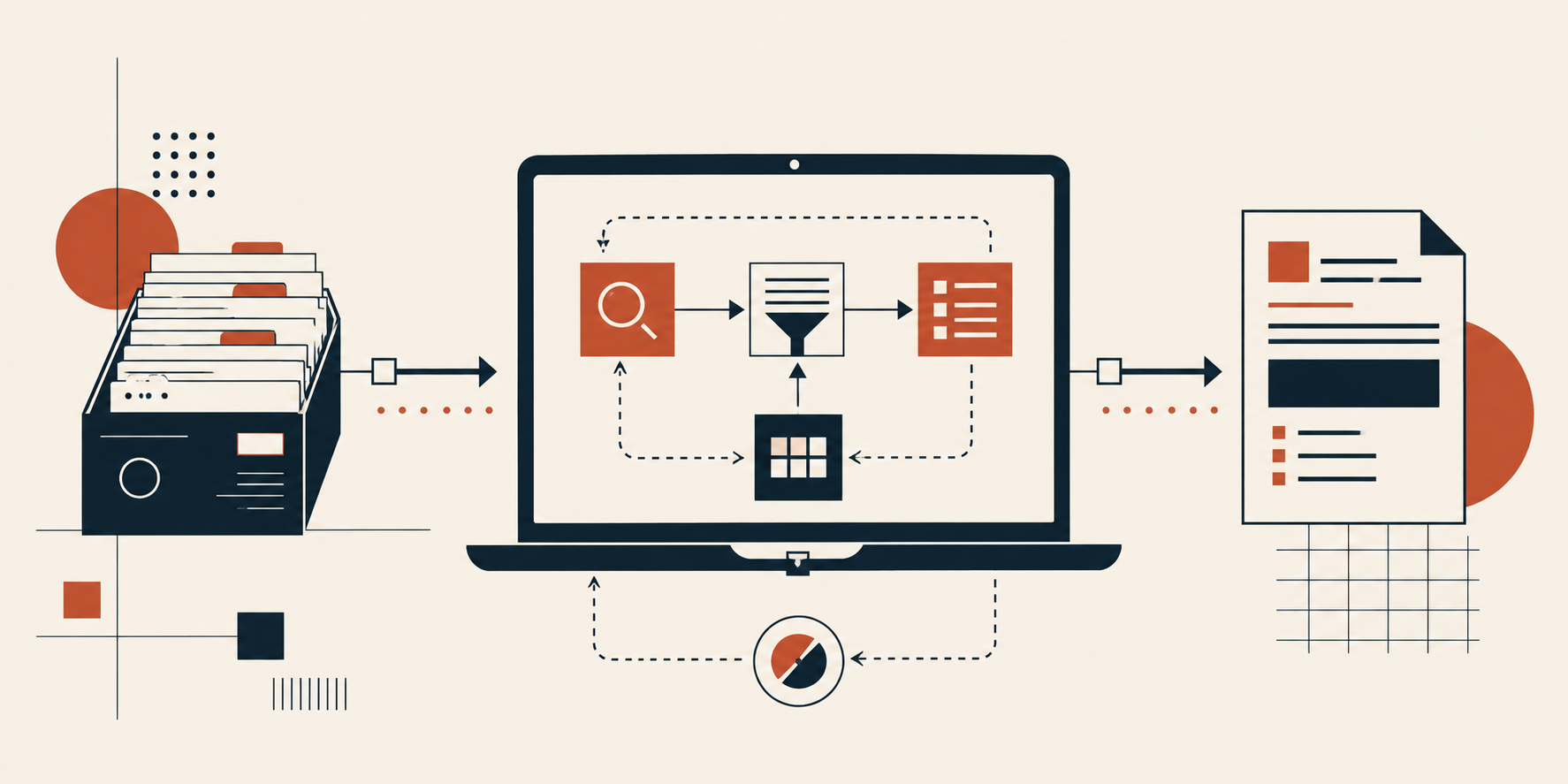
Set expectations honestly, though. CPU-only generation runs at a few tokens per second. That’s fine for a research assistant or internal knowledge tool. It’s not a high-traffic public application. The guide deliberately omits code, arguing that no short snippet can honestly represent a pipeline spanning ingestion, chunking, embedding, retrieval, prompting, and generation. Fair enough — but anyone who’s assembled one of these knows the real work isn’t the happy path. It’s the failure modes: retrieval thresholds, source citations, evaluation sets, and query logs that separate a demo from something you’d actually trust.