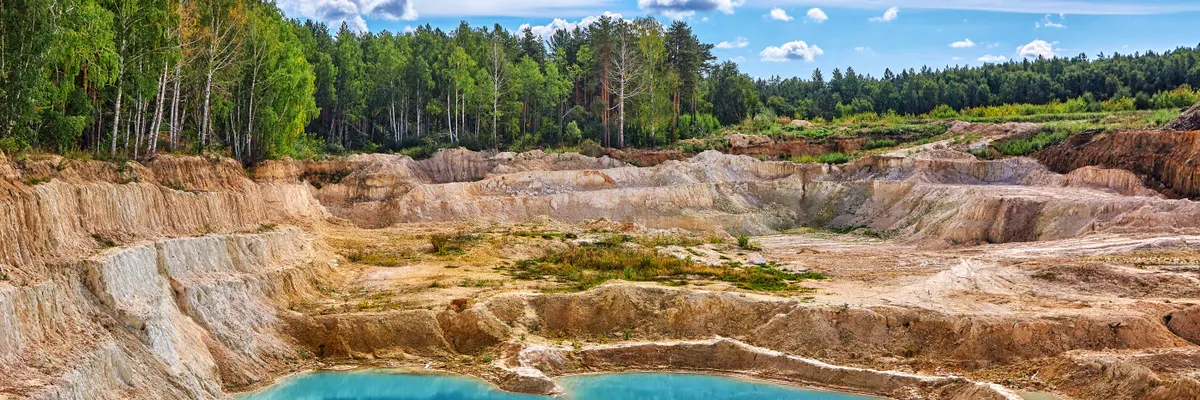
The Kidd Creek mine in northern Ontario isn’t just a copper and zinc operation. It’s been quietly venting hydrogen for more than a billion years, and geochemists finally put a number on it: roughly 140 metric tons annually across its 14,000 boreholes. Barbara Sherwood Lollar and Oliver Warr at the University of Toronto crunched data from 35 boreholes collected over a decade, finding each one consistently released about eight kilograms of hydrogen per year. That’s not a world-changing amount, but it’s enough to potentially power a meaningful slice of the mine’s own operations — a modest, real-world demonstration that geologic hydrogen can be captured and used.
The finding lands amid a global scramble for underground hydrogen. Dozens of startups, including Bill Gates–backed Koloma and Australia’s HyTerra, are drilling across the US Midwest and beyond, chasing ancient iron-rich rocks that split water molecules and release H2. The US Geological Survey has floated the tantalizing estimate that trillions of tons of hydrogen are generated in Earth’s crust — recovering even a fraction could cover global demand for centuries. But no one has yet reported a commercially viable reservoir, and public data is scarce as companies guard their drilling results to protect investment positions.
Kidd Creek isn’t an outlier. Laurent Truche at the University of Grenoble Alpes reported in 2024 that the Bulqizë chromium mine in Albania vents at least 200 metric tons of hydrogen annually. Truche’s take is blunt: “The remaining challenge is not proving that natural hydrogen exists, but proving that it can be produced economically and reliably at commercial scale.” The science of natural generation is increasingly settled. The economics are not.
That’s pushing researchers toward a different play: stimulation rather than extraction. ARPA-E has funded more than a dozen projects aiming to accelerate hydrogen production by injecting water, heat, or catalysts into reactive rock. The goal is a 10,000-fold speedup — the rate at which stimulated production pencils out commercially. An early field test in Oman injected 50,000 cubic meters of water into a one-kilometer borehole and later found gas spewing out at 90% hydrogen. Jo Shannon, a geoscientist at the University of Southampton, called it promising but flagged the obvious question: was that hydrogen created by the stimulation, or had it been sitting there all along? That uncertainty is the difference between a scalable technology and a geological curiosity.