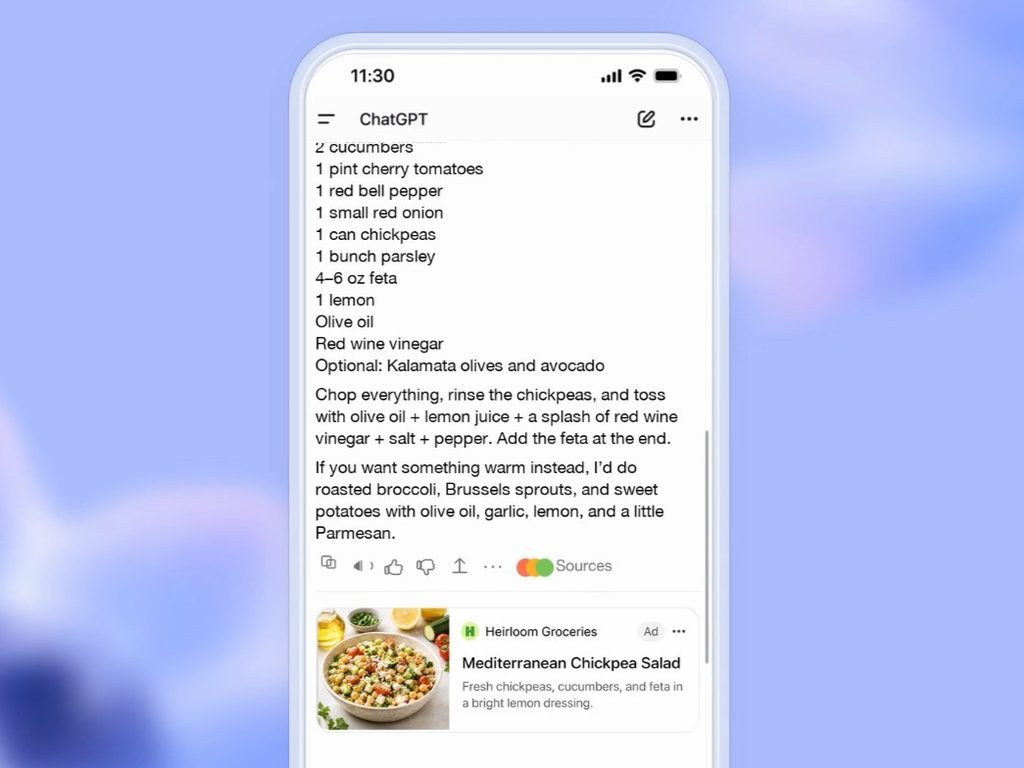
Six months into OpenAI’s advertising experiment, the numbers are in—and they’re not flattering. Searchable, an AI visibility platform, analyzed over 11,000 ads served inside real ChatGPT conversations between July 4 and August 4, 2026, grading each ad against the conversation it appeared in. A full third had no connection whatsoever to what the user was discussing. Only 27% were direct matches for the specific product being asked about. The remaining 40% were contextual—loosely tied to something mentioned earlier in the thread, but irrelevant to the question at hand.
The real problem runs deeper than miscategorized ads. More than two-thirds of all ads—68%—landed in conversations where the user never expressed purchase intent at any point. No buying, booking, hiring, or comparing. That’s not a targeting problem; it’s a fundamental mismatch between how people use ChatGPT and how advertisers expect to reach them. Unlike paid search, where advertisers bid on keywords that signal a buyer, ChatGPT’s platform asks advertisers to describe the conversations they want to appear in. OpenAI then matches those descriptions against live chats—chats where people are writing essays, debugging code, or thinking through problems, not shopping.
Some sectors are getting hit harder than others. Marketing and B2B services ads were unrelated 47% of the time, software and SaaS 45%. The best performers—data brokers, travel, automotive—still couldn’t crack a 50% direct relevancy rate. Insurance occupied a strange middle ground: rarely unrelated at 23%, rarely a direct match at 11%, with two-thirds of its ads attached to a life event somewhere in the thread rather than the actual question.
OpenAI’s defense, offered by then-CRO Denise Dresser in June, was that user dismissals of ads have fallen by half since launch in February. But Searchable’s month-long snapshot shows no improvement in relevance as ad volume grew—the unrelated rate held steady at around a third. The stakes here are bigger than wasted impressions. ChatGPT’s recommendations inside responses already convert higher than other organic channels, which means the assistant’s own answer is often the real competitor. An ad that lands in the wrong conversation doesn’t just get scrolled past—it trains users to ignore ads entirely, making it harder for the placements that do work to earn attention. Advertisers betting on ChatGPT as the next search channel may need to recalibrate what ‘contextual targeting’ actually means when the context is a student asking for homework help, not a shopper comparing prices.