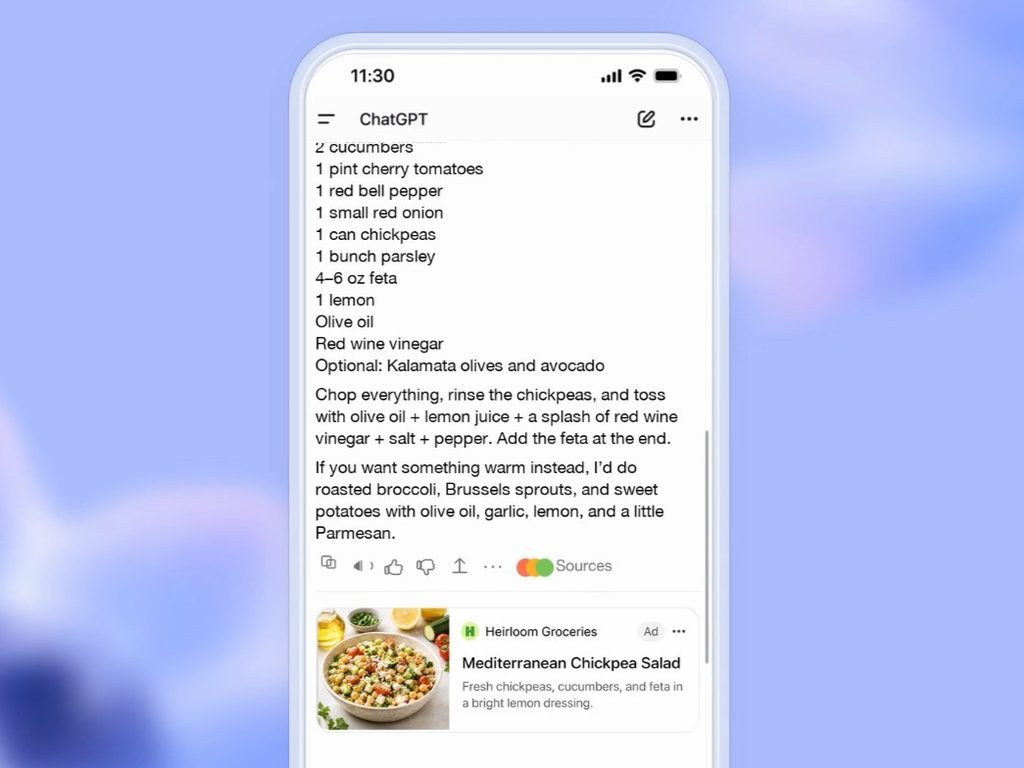
ChatGPT’s advertising business just crossed a threshold that would make most ad platforms envious: a $1 billion annualized revenue run rate in under 200 days. Tens of thousands of advertisers are now buying placements inside ChatGPT conversations, and OpenAI is pushing self-service access into India, Europe, the Middle East, and North Africa starting today. Ads Manager, the self-serve portal introduced in May, was the unlock. Small and medium-sized businesses now account for what OpenAI calls a material share of total ad revenue, and advertisers outside the US are driving a growing portion of it.
The pitch is genuinely different from search ads. OpenAI argues that people arrive at ChatGPT mid-decision — comparing options, planning a renovation, weighing a job change — and its system reads the conversation to select an ad relevant to whatever’s being discussed. Where users have opted in, targeting can also draw on broader usage context and shared interests. It’s contextual advertising with a conversational twist, and it sidesteps the separate-results-page model Google built an empire on. Whether users actually welcome ads woven into what feels like a private exchange remains an open question.
Brussels isn’t waiting to find out. The European Commission designated ChatGPT a Very Large Online Search Engine under the Digital Services Act, the same week Reddit and Roblox got Very Large Online Platform status. All three crossed 45 million average monthly EU users. OpenAI now has four months to meet the added DSA duties, with a January 2027 deadline. Those obligations include assessing and mitigating systemic risks tied to illegal content, effects on minors, mental wellbeing, and electoral processes. The Commission’s EVP Henna Virkkunen put it bluntly: these services “will now be held to a higher standard of scrutiny and accountability.”
The timing is notable. OpenAI is expanding its ad footprint into Europe exactly as EU regulators tighten oversight of the same product. The Commission classified ChatGPT as a hybrid service — an AI system that responds to prompts and searches the web — and that search capability is precisely why it’s treated as a search engine. Ireland’s Coimisiún na Meán will supervise alongside the Commission. With 28 VLOPs and VLOSEs now designated, the DSA is becoming the regulatory framework that AI companies can’t ignore, even as they chase ad dollars.