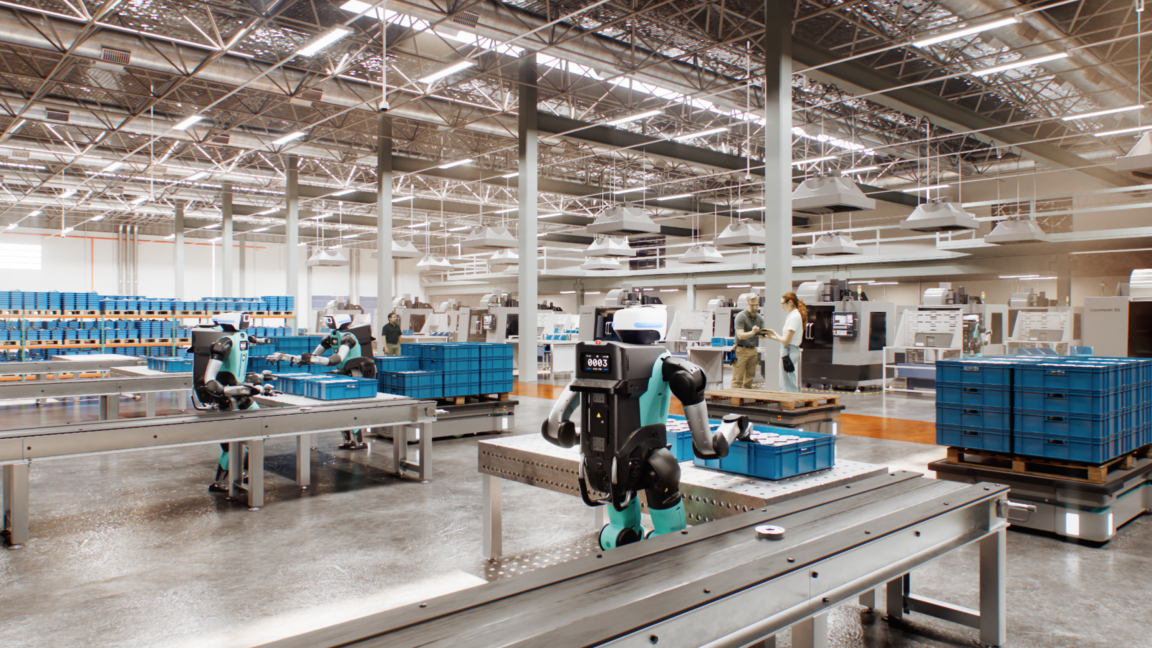
Warehouses have long relied on cages and yellow tape to keep workers safe from heavy machinery. Agility Robotics is betting that its new Digit 5 humanoid can finally erase those physical barriers. The company unveiled the robot with a core promise: it can operate safely alongside flesh-and-blood coworkers without requiring isolated work cells. This isn’t just a marketing pitch; it addresses the single biggest bottleneck in industrial automation. If robots can truly share space with humans, the addressable market for humanoid labor expands exponentially.
The safety mechanism is surprisingly organic. When Digit 5 spots a person at a distance, it doesn’t just stop. It actively maneuvers to avoid collision or stands still to let the human pass. If someone gets too close, the robot squats into a seated position. Pras Velagapudi, Agility’s chief technology officer, described this as a “complex safe motion system” that tailors its mitigation strategy based on the specific type of human presence detected. This dynamic response moves beyond simple emergency stops, allowing for fluid interaction in chaotic environments like automotive assembly lines.
Agility isn’t starting from scratch. The Salem, Oregon-based company has already logged more than 65,000 hours of real-world operation with earlier Digit models. Major players like Amazon, Toyota Motor Manufacturing Canada, GXO, and Schaeffler have piloted or deployed these units. In 2024, Agility became the first to place humanoids in full-time commercial roles at a GXO warehouse in Atlanta. That operational history gives weight to their latest claims. They know where the failures happen because they’ve been there for thousands of hours.
Production is already ramping up at their retooled RoboFab facility in Oregon. Early access customers will get their hands on Digit 5 in the first half of 2027, with general availability following by year’s end. While three years feels like an eternity in tech time, industrial sales cycles move slowly. The real test won’t be whether the robot can squat, but whether it can maintain that grace under the relentless pressure of a holiday shipping surge. If it holds up, the cage-free warehouse might finally become standard practice.