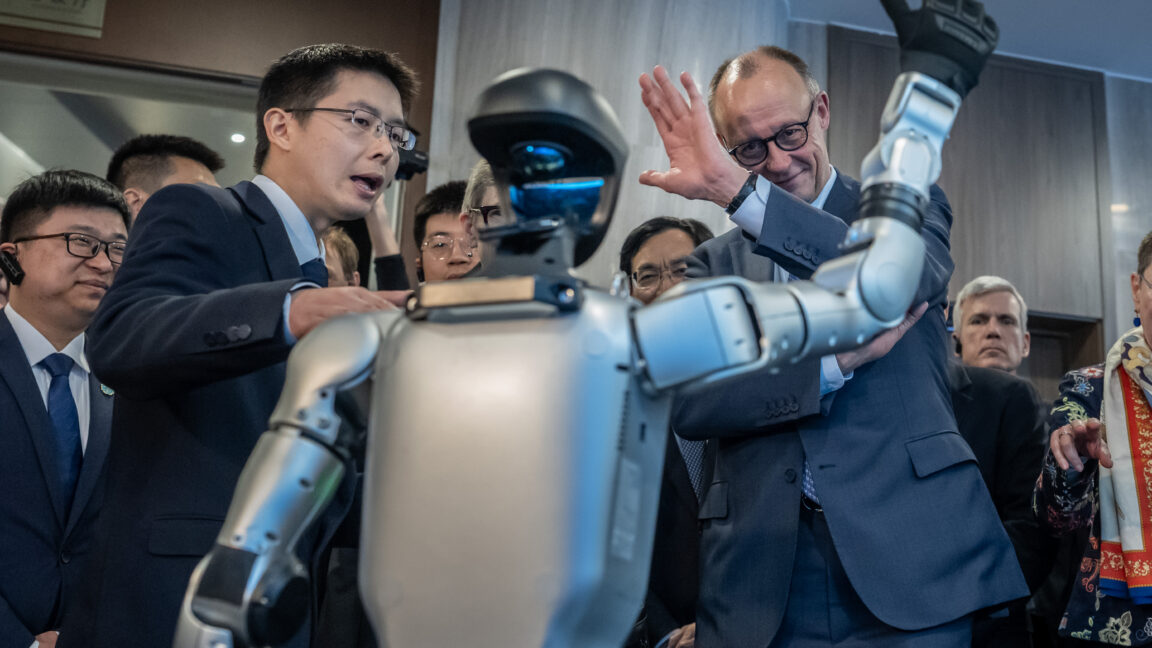
Wang Xingxing doesn’t just lead Unitree Robotics; he obsesses over it. The introverted founder, who recently appeared at a high-profile symposium with President Xi Jinping, personally dictates everything from corporate strategy to the exact length of individual screws in his machines. This extreme micromanagement fueled Unitree’s August 19 IPO on the Shanghai Stock Exchange STAR Market, making Wang phenomenally wealthy and cementing China’s lead in affordable humanoid robots. But as Caijing Magazine’s investigative report “The King of Unitree” reveals, this success comes with a heavy operational tax.
The financial results are undeniable. Unitree has slashed prices to levels that Western competitors struggle to match. A baseline G1 humanoid robot costs developers $13,500, while the consumer-focused R1 robot dog sells for just $4,900. Engineers attribute these rock-bottom prices to aggressive structural engineering and design choices that strip away non-essentials. Wang’s cost-cutting focus isn’t just about margins; it’s a deliberate strategy to flood the market with accessible hardware, forcing the entire industry to rethink their pricing models.
However, cheap hardware often means fragile hardware. Early employees described an “extremely high” rate of returns for repairs, suggesting that Wang’s obsession with detail didn’t initially translate to durability. While the company claims reliability has improved enough to meet standard six-month or one-year warranty periods, the shadow of those early failures lingers. Investors and staff alike worry that Wang’s startup-style control may not scale effectively as Unitree grows into a global player.
This tension between affordability and quality defines the current Chinese robotics boom. Unitree proves you can build a walking robot for under $5,000, but the question remains whether such devices can survive real-world use without constant maintenance. As Wang tightens his grip on every bolt and balance sheet entry, the industry watches to see if his meticulous approach can sustain growth or if it will eventually snap under its own weight.