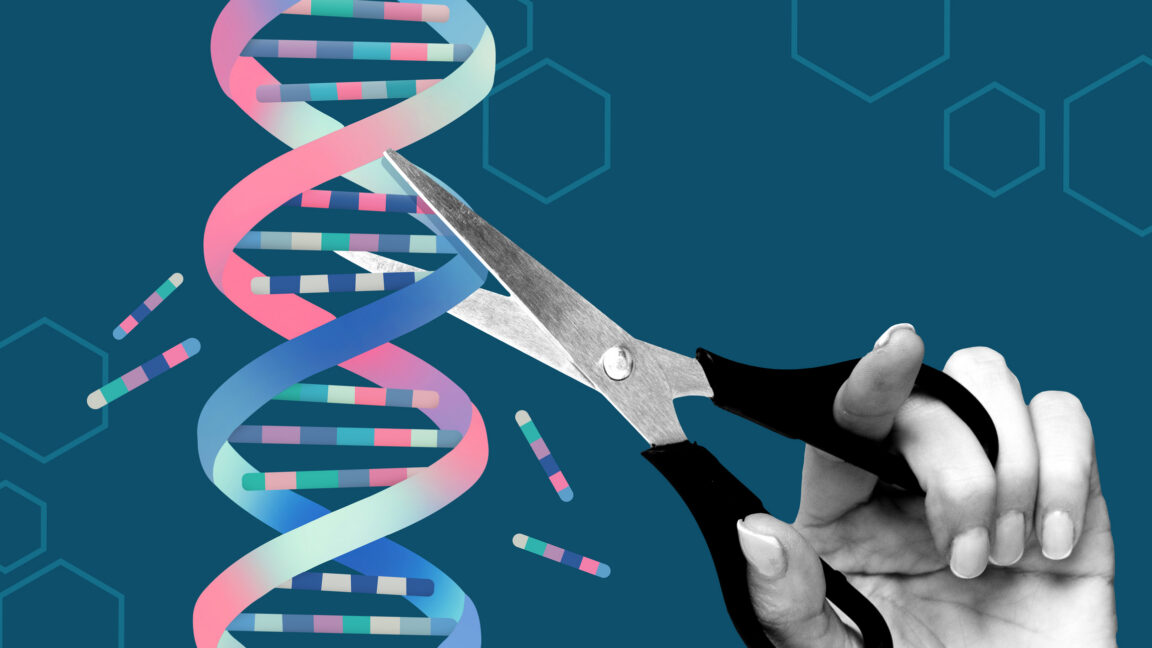
The promise of gene editing has always been shadowed by a simple, terrifying math problem. Even a system that’s 99.9% specific will make mistakes when you’re editing millions of cells. Those off-target edits—where CRISPR’s molecular scissors cut the wrong bit of DNA—aren’t just a nuisance; they’re a potential cancer risk and the single biggest barrier between promising lab results and an actual approved therapy you can get at a hospital.
Researchers have now pulled a clever trick to solve this, and it involves one of AI’s most famous tools: AlphaFold, the protein-structure prediction software from Google DeepMind. As detailed in a recent issue of Nature, scientists didn’t just use AlphaFold as a calculator. They modified it to zero in on the specific protein regions in the Cas enzyme that were physically responsible for these sloppy, off-target cuts. It’s a shift from treating the protein as a black box to doing precision engineering on it.
Once they identified those troublesome structural features, the team went in and tweaked them. The result is a new generation of Cas proteins that maintain their ability to find and cut the correct disease-causing gene but have a drastically reduced tendency to wander off-script. This goes beyond the standard safety practice of simply picking a better guide RNA sequence that doesn’t match anything else in the genome. This is about rebuilding the actual cutting tool so it’s inherently less prone to error, no matter what guide it’s holding.
This isn’t just an incremental improvement. It addresses the fundamental tension in the field: we need these editors to be active enough to work in a therapeutic setting, but we can’t afford the stochastic damage they cause along the way. By letting a modified AI model point directly to the problem, the researchers essentially fast-tracked a process of protein evolution that might have taken years of trial and error in a wet lab. It’s a perfect example of AI not just analyzing biology, but actively assisting in building better biological parts.