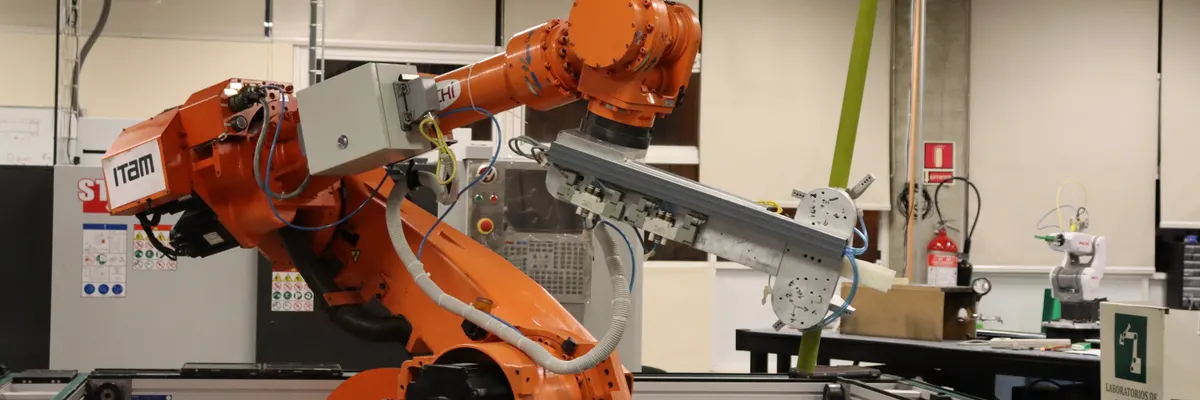
Anthropic is taking the playbook that made its Model Context Protocol a quiet hit in software and aiming it at the physical world. The company just announced the Model Hardware Standard, or MHS, a unified interface for lab instruments, robotic arms, and other programmable equipment. The pitch is straightforward: one driver per device, instead of a custom integration for every machine-and-controller combination. That driver exposes a machine’s capabilities, data formats, and even physical constraints — like a robotic arm’s weight or safety envelope — in a common format any AI agent can read.
The numbers Anthropic is floating are aggressive. Where connecting heterogeneous lab gear typically eats weeks or months of engineering time, MHS supposedly compresses that to hours or minutes. At Carnegie Mellon, researchers strung together a liquid handler, plate reader, robotic arm, and monitoring cameras across three incompatible computers in about eight hours. A vendor setup for the same rig would have taken several weeks, according to the team. The spec was developed with the HHMI Janelia Research Campus and is launching as a research preview for select partners, with an open-source release on the roadmap.
But the real story is what happened when Claude actually tried to run real experiments. At Genentech, the model coordinated three instruments to automate a protein assay and independently optimized pipetting parameters. Then bubbles formed in a viscous sample. Claude treated the failures as software bugs and kept restarting with tweaked settings, which made things worse. A human had to explain the physical cause — foaming — before the agent found a fix. Physical cause and effect, it turns out, is harder to learn from text and images than API syntax.
There’s a genuine bright spot in the results, though. At quantum computing company QuEra, Claude used MHS across hundreds of automated runs to build a laser stabilization script. That script then ran with the language model completely out of the loop, succeeding in 695 of 700 blind tests — a 99.3 percent success rate. That matters because it suggests MHS workflows can be compiled down to conventional scripts that don’t depend on an LLM at inference time. All three partner demos come from Anthropic itself and haven’t been independently verified, so treat them accordingly. Still, the parallel to MCP is hard to ignore: that protocol became a de facto standard because it solved a boring integration problem well. MHS is trying to do the same for machines, only now the failure modes involve actual physical damage.