Anthropic just opened a research preview for the Model Hardware Standard (MHS), a shared driver specification that lets AI agents discover and operate physical lab equipment without someone hand-writing custom translators for every device pair. The pitch is straightforward: any instrument with a programmable interface becomes something an agent can read from, write to, and safely control through a small set of primitives.
The most striking validation comes from QuEra Computing. Their four-person team had spent months building a laser-relock script that worked about 58% of the time, with each attempt taking roughly 150 seconds. Given the same problem through MHS, a four-role agent loop ran overnight unattended and produced a deterministic Python script that recovered the lock 695 times out of 700 attempts — a 99.3% success rate, with the hardest cases resolved in 10 to 14 seconds versus 5 to 10 minutes for a human. Claude also cut the servo’s residual error from a specialist’s 15.7 mV down to 1.55 mV, and over a 19-hour run its tune never lost lock while the expert’s tune unlocked about 1.6 times per hour.
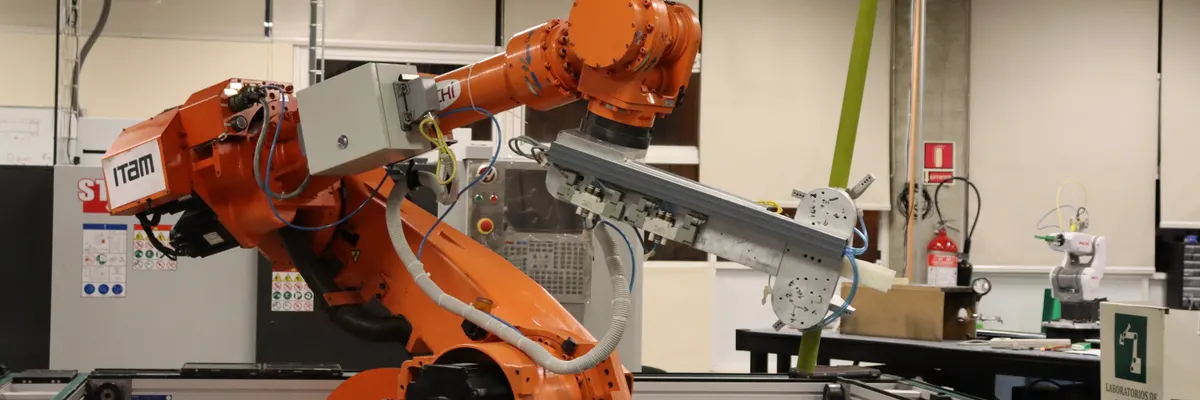
Other partners reported similar compression. Carnegie Mellon orchestrated a liquid handler, plate reader, robotic arm, and cameras across three incompatible computers — one with no programmatic interface at all — and went from driver-writing to a completed dose-response curve in about eight hours. A vendor setup for the same task typically takes several weeks. The agent even rejected an R² below 0.9 and autonomously reran the experiment. Genentech automated a BCA protein assay and converged on transfer speeds its own experts confirmed as reasonable. University of Washington connected six instruments in under a week.
MHS is model-agnostic and works through the Model Context Protocol, a CLI, or code files. Safety limits live in the driver itself rather than in prompts, which is a meaningful design choice — it means guardrails are enforced at the control layer, not negotiated in conversation. Anthropic is careful to note the preview remains gated and that Claude’s physical reasoning still has real gaps, so supervised use is the expectation. That candor is warranted. The numbers from QuEra and CMU suggest the integration tax on lab automation may finally be negotiable, but a preview with hand-picked partners is a long way from a standard the broader hardware ecosystem adopts without friction.