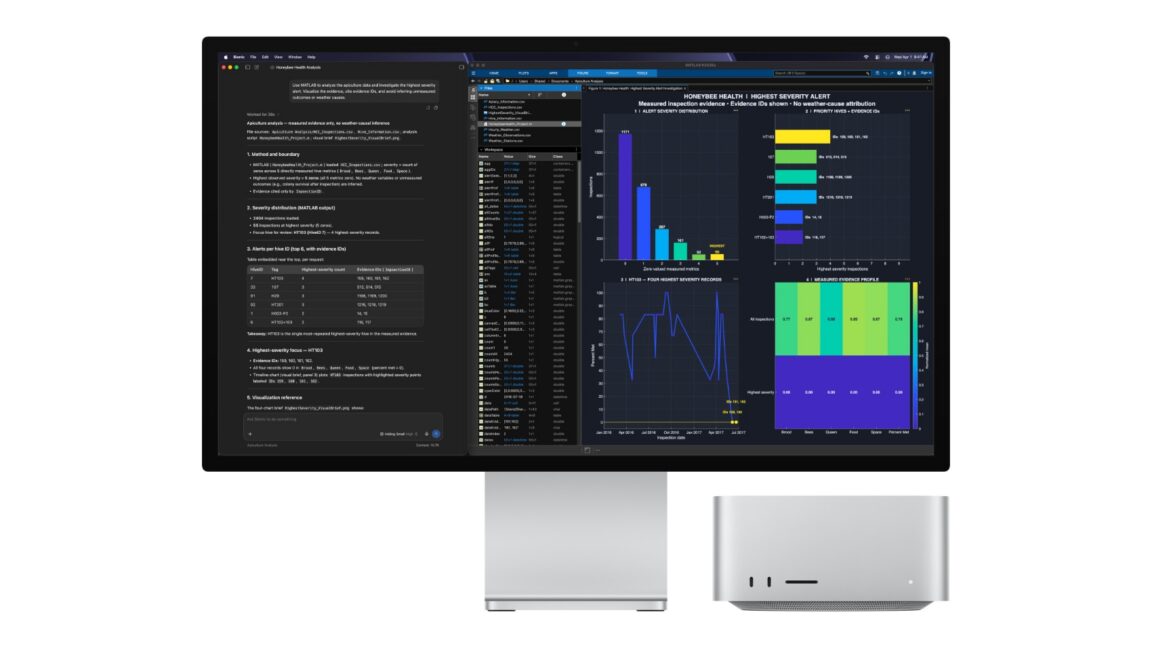
Apple dropped new Mac mini and Mac Studio models today alongside two fresh chips: the M6, the first 2nm processor in the M-series lineup, and the M5 Ultra, which now tops the family for raw power—especially on AI workloads. If you were hoping for a redesign, keep waiting. This is a pure specs bump. But the positioning says everything about who Apple thinks is buying these machines now.
The interesting backstory here is that both desktops became surprise hits for local AI inference after macOS 26.2 shipped last December. That update enabled what Apple’s release notes called “low-latency communication between Thunderbolt 5 hosts for use cases including distributed AI inference using MLX.” MLX is Apple’s open source array framework built to squeeze the most out of the unified memory architecture on M-series chips. Thunderbolt 5 provides the fast wired connection that makes the whole trick work.
Since then, hobbyists and professional developers have been daisy-chaining Mac minis and Mac Studios to run local large language models far bigger than any single mass-market device could handle. It’s become a legitimate alternative to dropping serious cash on specialized hardware packed with Nvidia GPUs. Apple clearly noticed. The company is now leaning hard into that use case—one that didn’t exist when earlier iterations of these machines were first engineered.
What’s notable is the timing. The M6 being the first 2nm chip in the lineup is a milestone, but the real story is Apple acknowledging that a chunk of its desktop audience isn’t buying these for video editing or Xcode anymore. They’re building poor man’s GPU clusters out of Mac minis. Whether that scales beyond the enthusiast crowd remains an open question, but Apple’s marketing pivot suggests the company sees it as more than a niche.