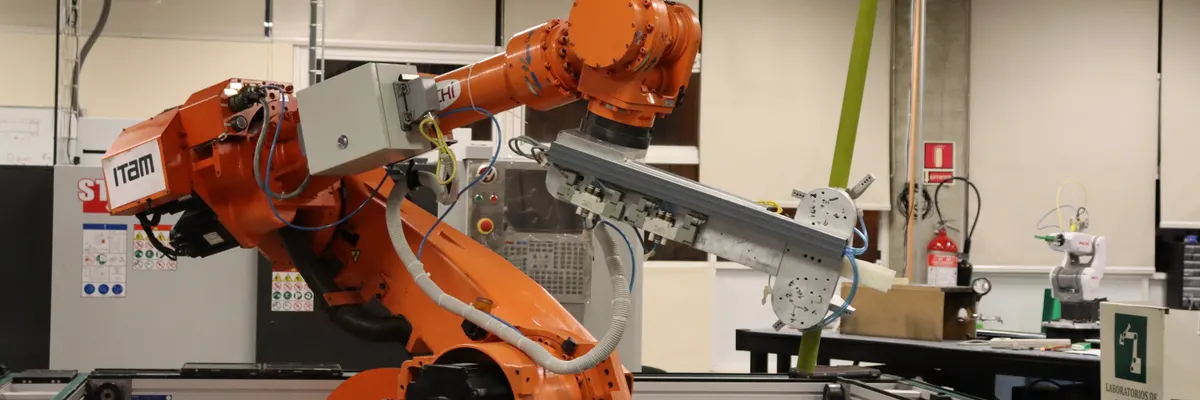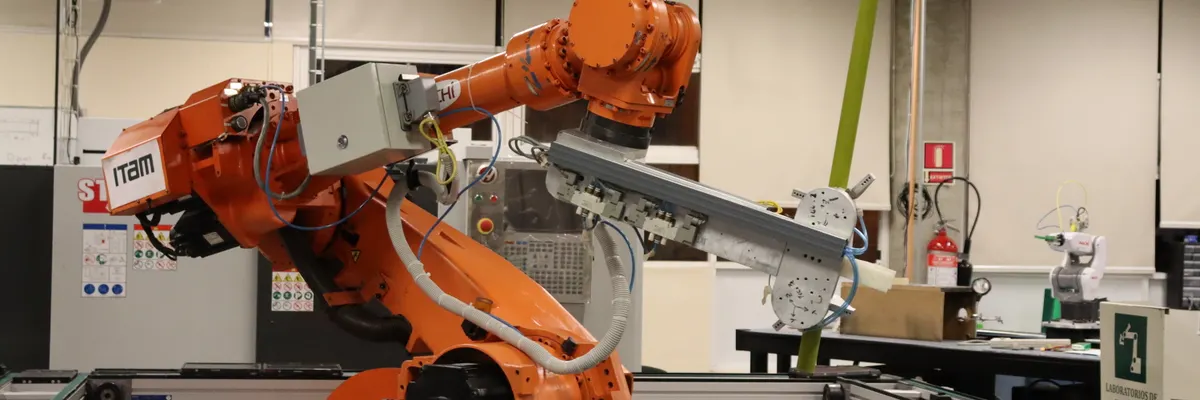
Robot manipulation has a data problem. While models grow exponentially, the datasets feeding them remain static, closed, and painfully small. A team from Axis Robotics, UC Berkeley, Georgia Tech, and NTU is trying to break this bottleneck with AXIS, a system that moves demonstration collection directly into the web browser. Instead of waiting for lab hardware or shipping fixed benchmarks, contributors teleoperate a Franka Research 3 arm using keyboard or gamepad inputs within a MuJoCo WebAssembly frontend. The heavy lifting—physics stepping and rendering—is offloaded to backend GPUs, ensuring that logged state-action samples stay aligned with the simulator rather than lagging behind the user interface.
The scale is already significant. The initial release includes 207 tasks and 50,129 verified episodes, credited to over 70,000 community members. But volume alone isn’t the story; quality control is baked into the pipeline. The system drops static samples where joint variation falls below 5e-3 and applies Savitzky-Golay filtering to smooth motion. This cleaning process is aggressive. It cuts mean acceleration by nearly 64% and mean jerk by over 80%, creating smoother trajectories. There is a trade-off, however: replay success drops from 100% to 86.2%. The team argues this is a necessary cost for generating data that generalizes better than raw, noisy human input.
Does it actually improve performance? Yes, but with caveats. When pretraining the π0.5 model on the full AXIS dataset, overall scores on the LIBERO-Plus benchmark rose from 83.9 to 88.8. That 4.9-point gain significantly outperforms a RoboCasa365 control group matched for trajectory count, which only scored 57.5. This suggests the benefit comes from the diversity and structure of the data, not just its size. Gains were most pronounced in areas where the augmentation pipeline actively randomized variables, such as sensor noise (+13.7) and camera angles (+11.3).
Not every axis improved. Performance on light and language tasks actually regressed, dropping by 1.7 and 1.3 points respectively. Camera performance also dipped at the 50% data snapshot before recovering at full scale. This inconsistency hints that while browser-based collection solves the volume crisis, it introduces new noise patterns that models must learn to ignore. The training code is public as a patch over OpenPI, but the dataset remains gated for non-commercial academic use, and no policy checkpoints were released. It is a promising step toward open, scalable robotics data, but the regression in specific tasks suggests we are not yet done optimizing the signal-to-noise ratio.