The image of a lone air tanker dumping a red plume of retardant is iconic, but a far less cinematic approach to firefighting just got a real-world test in California. On July 15, CAL FIRE ran a field exercise involving five autonomous drones working in a swarm, not to douse a raging inferno, but to snuff out a small blaze before it ever makes the evening news. It’s a shift in strategy from reactive to preemptive, and it could fundamentally change how we deploy resources as fire season becomes a year-round threat.
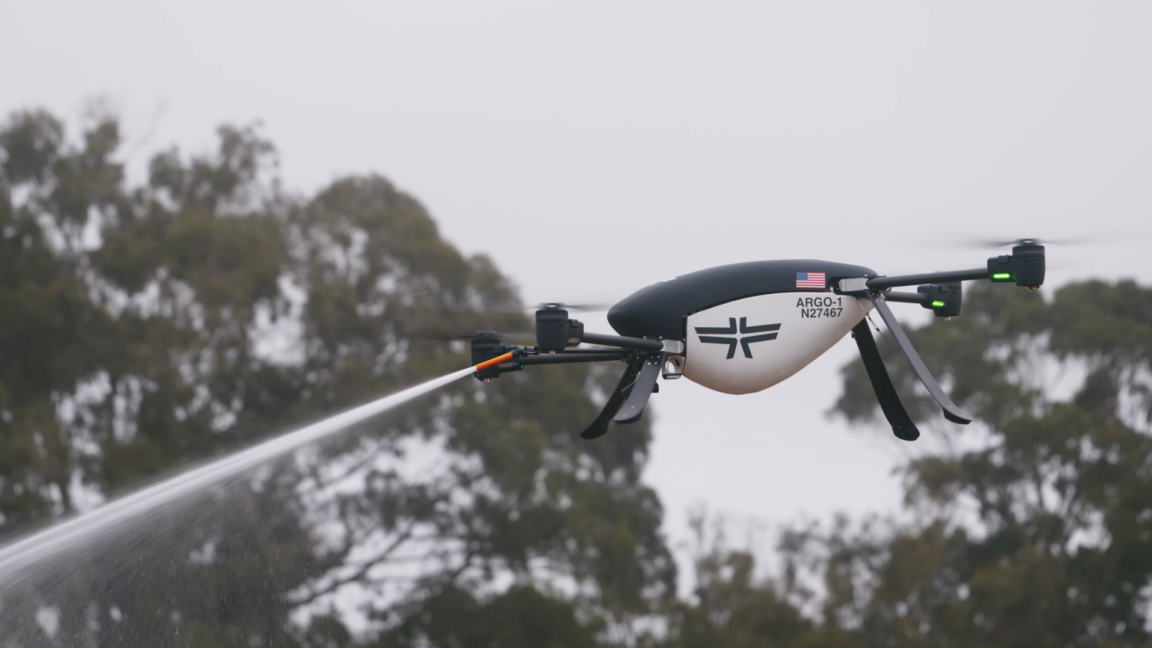
The demonstration, organized with the nonprofit FireWERX and the California-based company Seneca, involved the Argo-1 drone. Don’t picture a Predator-sized aircraft; these things fit in the back of a pickup truck with the tailgate down. Each can carry about 100 pounds of water or retardant, and they’re designed to operate in teams of four to six. A human operator just has to upload a GPS point. From there, as HeliOps Magazine reported, the drones fly themselves, using onboard sensors to pinpoint a fire’s heat signature and finding the optimal hover altitude to line up sequential attacks.
Nobody is pretending this will replace a 747 Supertanker. With a combat radius of just 10 miles and a cruising speed of 30 mph, the swarm’s effectiveness hinges entirely on prepositioning. Seneca, which is making the drones commercially available in 2026, envisions them being trucked to high-risk zones, ready to launch within minutes of a smoke report. The payload—500 to 1,000 gallons of foam combined in the test—isn’t massive, but it’s surgical. That’s a meaningful volume of suppressant if it arrives when a fire is still the size of a campfire, not a 100-acre monster.
This push for autonomous rapid response is also getting a boost from the $11 million XPRIZE Wildfire competition, which is driving innovation in exactly this space. The math is brutally simple: climate change is stretching firefighting budgets and airframes to a breaking point. A swarm of cheap, semi-disposable drones that can be scrambled instantly doesn’t just add capacity—it changes the risk calculus. I’ll be watching to see if the commercial rollout in 2026 includes the kind of automated detection network that would make prepositioning more than just a logistical headache.