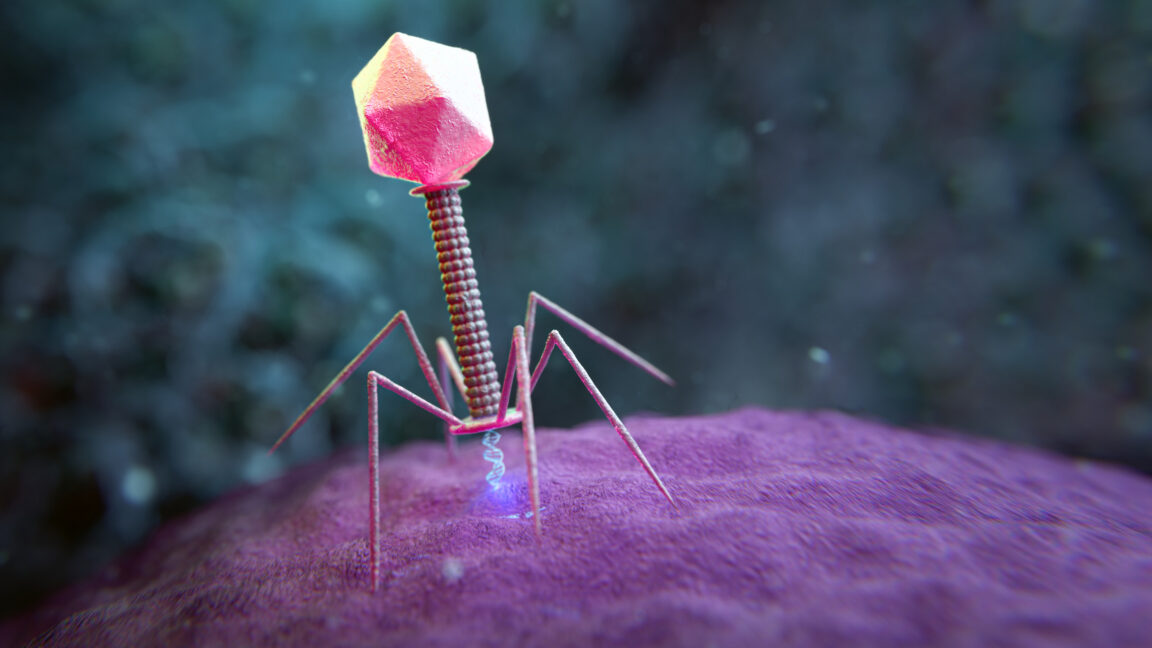
Stanford researchers just turned a generative AI model into a virus factory, and the early results are equal parts fascinating and unnerving. The team used Evo 2—an AI developed by assistant professor Brian Hie—to spit out thousands of new DNA sequences from a tiny snippet of the bacteriophage ΦX174 genome. After computational screening and chemical synthesis of nearly 300 candidates, laboratory testing narrowed the field to 16 designer phages that showed particularly strong E. coli-killing activity.
This isn’t about making minor tweaks to existing code. Hie wanted Evo 2 to generate an entire viral genome end-to-end in a single left-to-right pass, no human additions required. The system obliged, producing some phages that outperformed native ΦX174 in the lab. That’s a genuine threshold moment: the model didn’t just remix what nature already built—it proposed sequences with higher fitness, a concept that matters enormously for any future where we design biology from scratch.
Practical constraints are still very real, and the team is upfront about them. Graduate student Samuel King built a computational framework to vet Evo 2’s output before anyone paid for DNA synthesis, because generating thousands of genomes is cheap but printing and testing them isn’t. Hie noted the framework concentrated spending on the most viable candidates. The 16-phage cocktail then rapidly overcame resistance in E. coli that was immune to native ΦX174—exactly the kind of result that makes phage therapy advocates sit up straighter. Hie is already eyeing targets like MRSA and Pseudomonas aeruginosa, the hospital-acquired nightmare.
What separates this from a standard academic paper is the deliberate open-source release of Evo 2. Hie acknowledged the dual-use risk—bad actors could theoretically modify the tool—but argued existing pathogens pose a far more immediate threat anyway. His counterpoint is practical: AI-enabled systems can accelerate pandemic response and build defensive options against engineered bioweapons. It’s a calculated bet that transparency beats secrecy when the underlying technology is already spreading. The next phase pushes toward longer, more complex DNA sequences, including small bacterial genomes that could produce chemicals or fuels. The door King mentioned isn’t just open—it’s off its hinges.