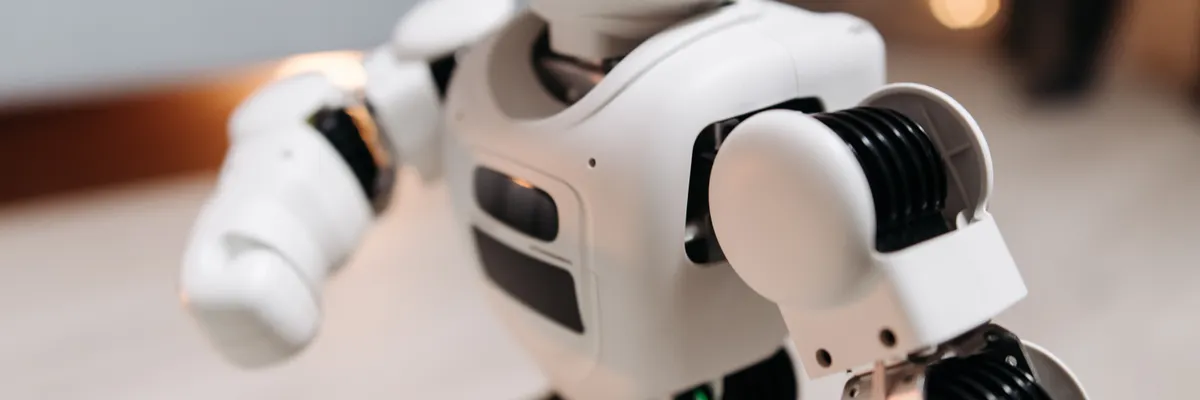
The biggest hurdle for generalist robots isn’t shaky hands or slow processors. It’s data. Specifically, the fact that almost every dataset used to train these machines comes from the same kind of place: a controlled academic lab, tasked by a small group of researchers, with a single robot arm. That’s the core argument from a new deep dive by the LeRobot team, who frame generalization not as a model architecture problem, but as a data phenomenon.
Physical Intelligence has put it bluntly: a robot needs to figure out a task in a new setting with new objects, and that requires generalizing across physical, visual, and semantic levels simultaneously. You can’t just teach a bot to pick up a spoon. It needs to know to grab it by the handle, even if it’s a weird spoon it’s never seen, buried in a pile of dirty dishes. That kind of common-sense understanding emerges from diversity in training data — something the field sorely lacks. LeRobot points out that unlike ImageNet, which aggregated internet-scale imagery to reflect the messy real world, robotics datasets are narrow. Scaling up to millions of demonstrations doesn’t help much if one dataset dominates, baking in its specific lab’s biases.
The community is starting to push back against this. LeRobot is seeing a rapid uptick in community-contributed datasets on the Hugging Face Hub, with creative projects ranging from a robot playing chess captured in stereo to a bot interacting with toy chickens. Most contributions still revolve around the So100 and Koch robotic arms, but the very existence of these oddball datasets is a proof of concept. A robot that has only ever seen sterile lab tasks will be utterly useless if you ask it to “set up a surprise birthday party.” The path to a truly generalist machine isn’t just about bigger models — it’s about weirder, more diverse, and more human data. The bottleneck is shifting from hardware to curation, and the real test will be whether the field can build a dataset that actually looks like the world it wants its robots to operate in.