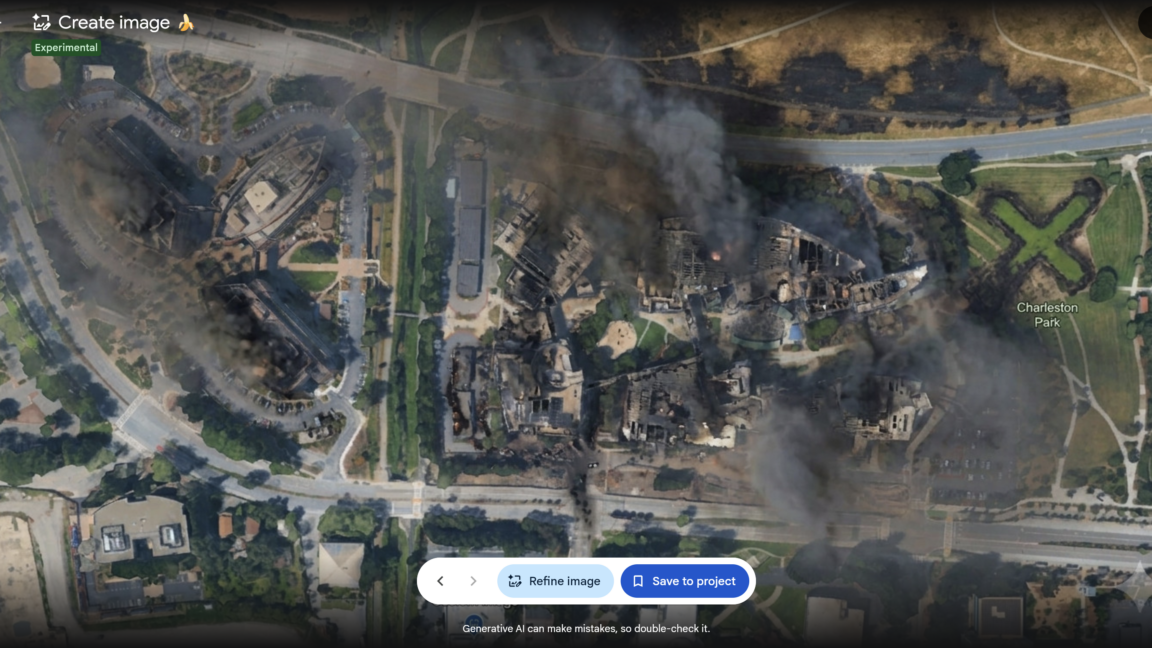
Google raced to disable a new generative AI feature in Google Earth this week, just one day after launching it. The tool, powered by the Nano Banana 2 model, let anyone blend photorealistic satellite imagery with AI-generated modifications, turning a crucial verification resource into a one-click disinformation factory.
Product manager Bryan Horowitz framed the launch differently, writing in a July 30 blog post that users could “generate custom images using Google Earth’s satellite, aerial, and 3D imagery alongside Nano Banana, which creates concepts grounded in the real world.” The grounding didn’t take long to crack. Almost immediately, researchers and journalists sound the alarm by showing exactly how easily the tool could be weaponized.
Eliot Higgins, founder of open-source investigation outfit Bellingcat, didn’t hold back. “Google Earth, a tool often used as a source of satellite imagery to verify photos and videos, has added a feature that allows you to alter satellite imagery with AI, for reasons,” he posted on Bluesky. He followed it up with the kind of satirical gut punch that clarifies a problem faster than any white paper: a fake satellite shot of a colossal golden Donald Trump statue dominating the White House grounds. “No way this could be abused,” he added.
The blowback was swift and predictable to anyone who has watched the generative AI space for longer than a news cycle. There is no shortage of tools for creating AI-modified cityscapes, but baking this capability directly into Google Earth lowered the barrier to creating fake, geo-located evidence to the floor. For a platform that human rights groups and newsrooms treat as a gold standard for verifying visual evidence, the cognitive whiplash was too much. Google announced the rollback on X within 24 hours, and Ars Technica confirmed the feature went dark shortly after.