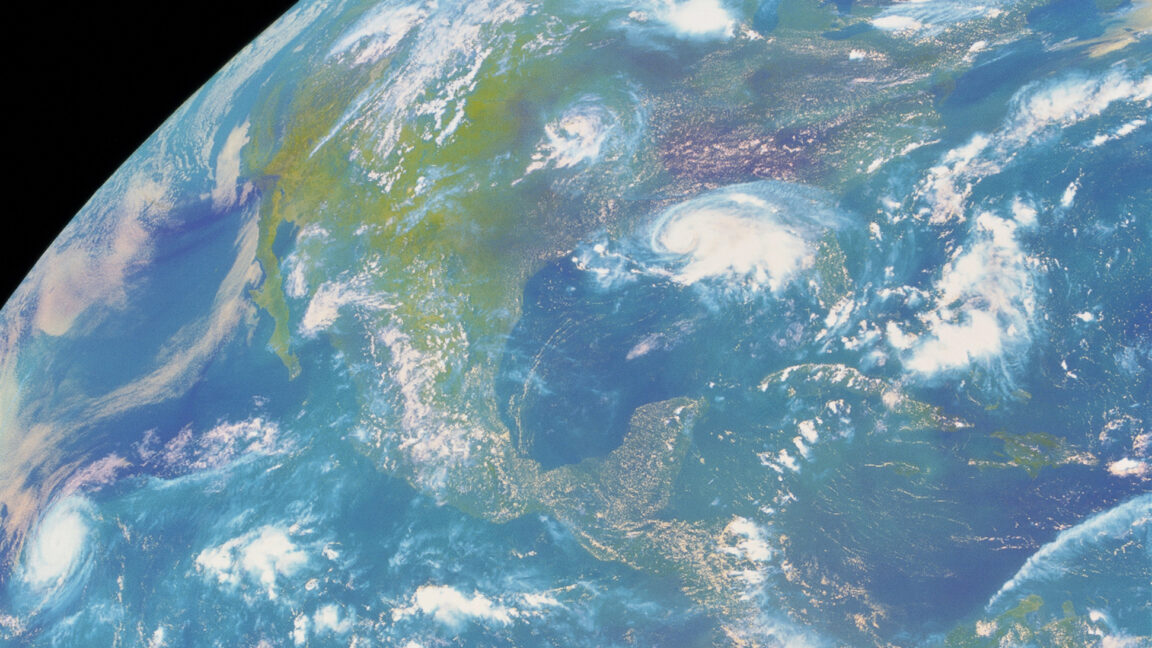
Google has rolled out version 3 of its WeatherNext AI model, marking a significant shift in how machine learning systems ingest atmospheric data. The most critical update is the direct integration of satellite weather data, a move that drastically shortens the lag time between real-world conditions and forecast generation. By bypassing the sole reliance on reanalysis datasets, WeatherNext 3 can now produce forecasts on an hourly basis. This frequency leap addresses a long-standing bottleneck in AI meteorology, where models typically waited six hours for global snapshots to refresh.
Most existing AI weather models train exclusively on reanalysis data. Think of reanalysis as a smoothed-over, consistent global snapshot of the atmosphere that fills in gaps where no physical sensors exist. While useful for training, this process acts like a blender, stripping away raw nuances from original data sources. Traditional physics-based models avoid this by ingesting diverse raw inputs to simulate forward motion. Google’s latest iteration bridges this gap. It combines the efficiency of machine learning with the granularity of raw satellite feeds, allowing it to capture atmospheric states with higher fidelity than its predecessors.
The upgrade isn’t just about speed. Google increased the spatial resolution and expanded the underlying machine-learning model size. To prevent these enhancements from ballooning computational costs, the team implemented specific process tweaks to keep efficiency high. They also introduced a separate ML model trained specifically on satellite-based precipitation estimates. This dual-model approach means users get multiple precipitation forecasts, offering a richer view of potential storm paths rather than a single probabilistic line.
This development signals that AI weather forecasting is maturing beyond simple pattern matching on cleaned datasets. By incorporating raw satellite data, Google is mimicking the data-hungry approach of traditional numerical weather prediction while retaining the speed advantages of neural networks. If hourly updates become the standard, industries relying on precise timing—like aviation, agriculture, and renewable energy grid management—could see operational efficiencies that six-hour windows simply couldn’t support. The question now is whether other major players will follow suit or stick to the safer, slower reanalysis route.