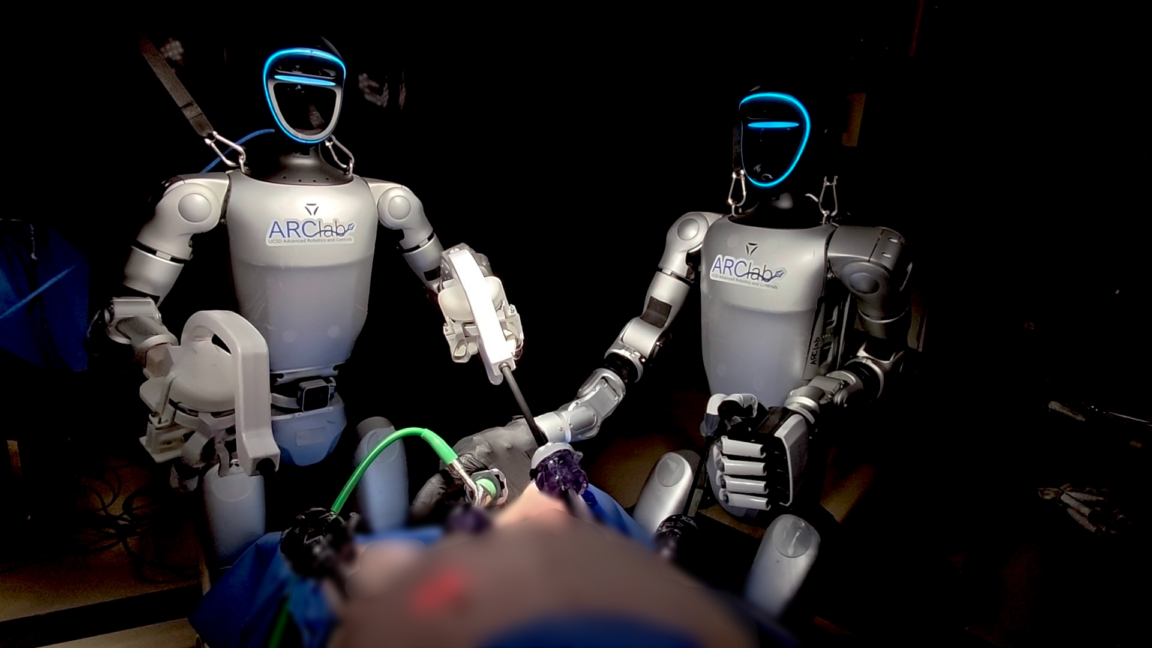
Surgeons have successfully used a humanoid robot to remove gallbladders from live pigs—but don’t imagine autonomous robot doctors just yet. In a groundbreaking experiment published in Nature, human operators remotely controlled a Unitree G1 humanoid robot to perform minimally invasive surgeries. The key selling point? Cost and size. While specialized surgical robots like the da Vinci system can run into millions of dollars and weigh as much as a small car, this humanoid robot costs as little as $13,500 and tips the scales at just 60 pounds. That makes it a practical option for rural clinics, battlefield hospitals, or even space stations where space and budgets are tight. The robot’s movements were entirely directed by skilled surgeons, so it’s not replacing doctors but extending their reach. Why it matters: This demo hints at a future where affordable humanoid robots could democratize robotic surgery, bringing expert-level care to places that can’t afford dedicated surgical systems.
Humanoid Robots Perform Pig Surgery Remotely
Surgeons have successfully used a humanoid robot to remove gallbladders from live pigs—but don't imagine autonomous robot doctors just yet. In a groundbreaking experiment published in *Nature*, human operators remotely c…
Summarized from
Ars Technica AI AI-summarized
Was this helpful?
Discussion
Join the conversation
Comments are powered by GitHub Discussions. You need a GitHub account to participate.



The sharpest AI news, curated daily.
One email each morning. Summarized, sourced, and skimmable in under three minutes.
The sharpest AI news, curated daily.
One email each morning. Summarized, sourced, and skimmable in under three minutes.