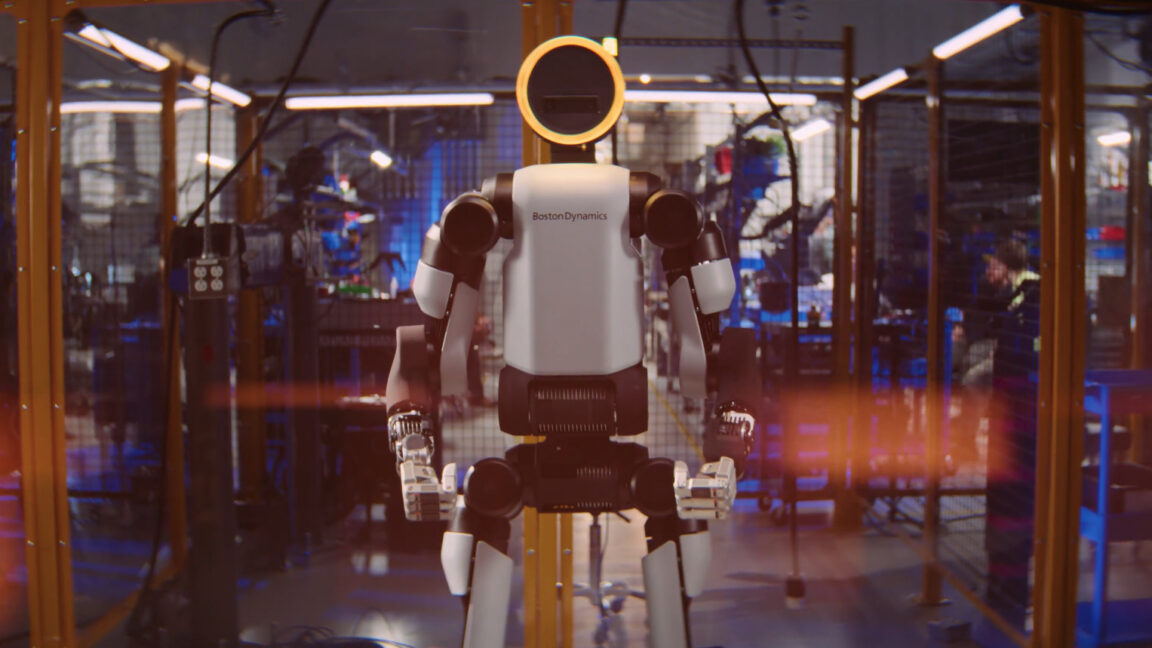
Hyundai is pushing back hard against the narrative that its South Korean union is striking over robots. The company says the current labor dispute at its Ulsan plant—the world’s largest auto factory—is purely about old-school compensation: wage hikes, bonuses, and raising the retirement age. In a statement, Hyundai clarified that deploying humanoid robots in Korean factories “is not part of the current labor-management discussions.” The official plan right now is narrowly focused on putting Boston Dynamics’ Atlas humanoid to work at its new Metaplant America in Georgia starting in 2028.
The Wall Street Journal, however, characterized the union’s demands as “unprecedented” moves to hedge against AI and automation. And the union’s own words make that hard to dismiss. In an internal letter reported by Reuters shortly after Hyundai unveiled the production Atlas model at CES, the union warned management point-blank: “Remember that without labor-management agreement, not a single robot using new technology will be allowed to enter the workplace.” That doesn’t sound like a group that’s only thinking about this year’s bonus.
Complicating the official line further, both sides are currently reviewing a wage reform proposal reported by The Korea Times. The overhaul would convert volatile overtime and night-shift pay into fixed wages, a move designed to provide income stability even when robots eventually eat into those extra hours. Some experts caution this could nuke productivity, but it reads like a very concrete attempt to build a financial cushion for the automation era.
So what’s actually happening? Hyundai is technically correct that robots aren’t on the current negotiating table. But the union is clearly looking past the immediate paycheck fight and trying to build a firewall for 2028 and beyond. The Georgia plant is the test case. The union in Korea wants a say long before any Atlas ever boots up on their floor. The real story isn’t what’s in this contract—it’s the battle over who controls the next one.