Thinking Machines Lab just flipped a familiar script. Usually, the smaller, distilled model trails the giant teacher. Inkling-Small doesn’t. This new open-weights release—276 billion total parameters, but only 12 billion active—outperforms its 975B sibling on the benchmarks developers actually care about: 80.2% on SWE-bench Verified versus Inkling’s 77.6%, and 31.6% on Humanity’s Last Exam, up from 29.7%.
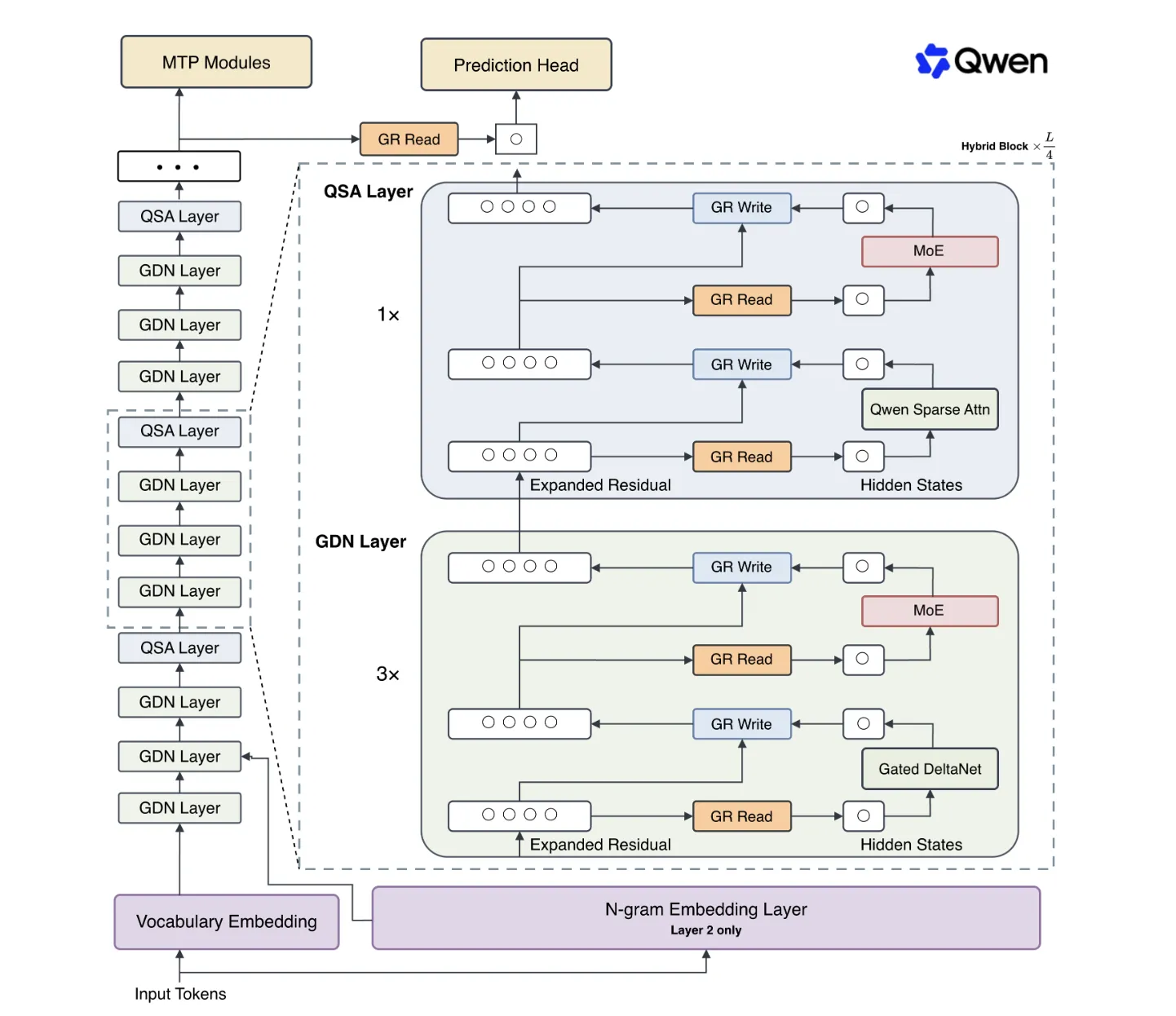
The secret sauce isn’t just the Mixture-of-Experts architecture routing tokens to 6 of 256 experts. The team post-trained an earlier checkpoint using on-policy distillation with Inkling as the teacher, then scaled agentic coding reinforcement learning for two more weeks. Training on NVIDIA GB300 NVL72 systems didn’t hurt. The result is a model that reasons natively over text, images, and audio with a 1 million token context window, all while letting you dial thinking effort up or down.
But the real headline for anyone shipping product: this thing runs on a single GPU. The NVFP4 checkpoint needs just 180 GB of aggregated VRAM, which fits on one B300. Two H200s can handle the W4A16 path. That’s a 276B model moving out of frontier-lab territory and into startup server racks. Financial services, healthcare, and telecom teams with compliance requirements can now self-host a top-tier reasoning model without building a small data center.
Not everything improved. SimpleQA Verified cratered to 20.6% from Inkling’s 43.9%—a reminder that distillation often trades factual recall for reasoning sharpness. And the AA Omniscience index dipped negative. But for the workloads Thinking Machines Lab is targeting—coding agents, terminal automation, document understanding, call-center analytics—these look like tradeoffs worth making. Both models hit Tinker with a limited-time discount, and the weights are on Hugging Face under Apache 2.0. The embed on their site even animates exactly how those sparse expert routes fire per layer, which is the kind of transparency more labs should steal.