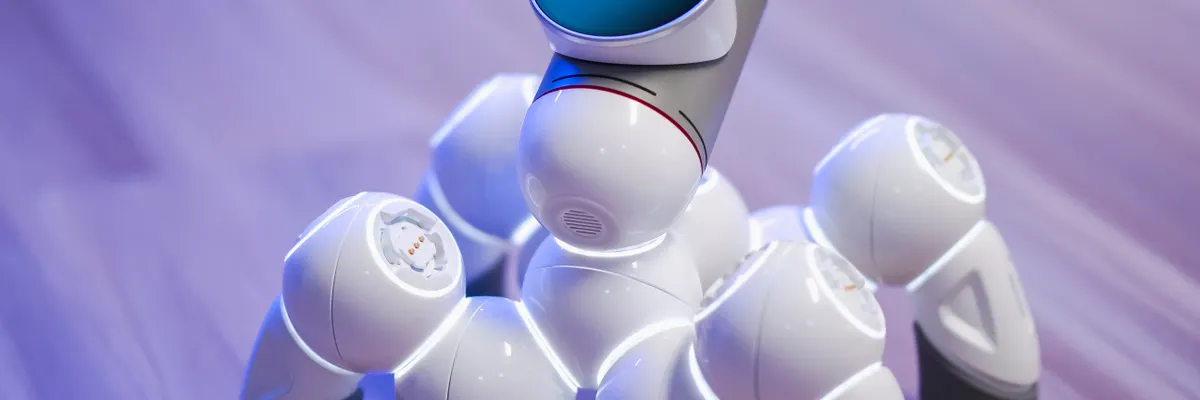
OpenAI just dropped a team update, and the headcount is now 45 people—small by Silicon Valley standards, but densely packed with talent poached from some of the most engineering-heavy names in tech. The nonprofit research outfit isn’t just staffing up; it’s building a very specific kind of hybrid team, blending pure research with hard-nosed product engineering and robotics deployment. Bob McGrew, who spent a decade at Palantir as it scaled from 10 to 1,500 employees, is now focused on robotics at OpenAI. That’s a signal: they’re not just interested in software abstractions. They’re serious about physical systems.
On the infrastructure and product side, Erika Reinhardt joins as Engineering Director from Planet Labs, where she managed everything from satellite mission control to image processing pipelines. Christopher Berner arrives from Facebook, where he scaled the Presto distributed SQL engine to handle hundreds of petabytes of data. Peter Welinder, who led Dropbox’s computer vision and machine learning teams, is also on board. This isn’t a collection of academics—it’s a crew that knows how to ship software that works at scale, under real-world constraints.
The research wing is getting deeper, too. Jakub Pachocki, fresh off a PhD at CMU, co-invented the fastest known algorithms for solving linear systems on graphs. Ankur Handa is bringing his work on scene understanding from Imperial College London, specifically his SceneNet RGB-D research. Then there are the builders who defy easy categorization: Alex Ray, who has a degree in Textile Engineering and previously designed inflatable habitats for Mars, and Aleks Kamko, a recent Berkeley grad who taught operating systems while researching distributed machine learning.
Looking at the roster, the blurring of lines feels intentional. You have people like Rachel Fong, who built a $50 desktop 3D scanner and an NLP backend for language learning, sitting alongside competitive programming champions like Pachocki. OpenAI is assembling the kind of multidisciplinary team that can validate a novel idea in the morning and write the firmware to test it on a robot by the afternoon. The real question is what 45 people with this specific mix of skills can produce that a 450-person team at a traditional lab cannot. It’s a bet that small, high-bandwidth groups still beat large, siloed ones.