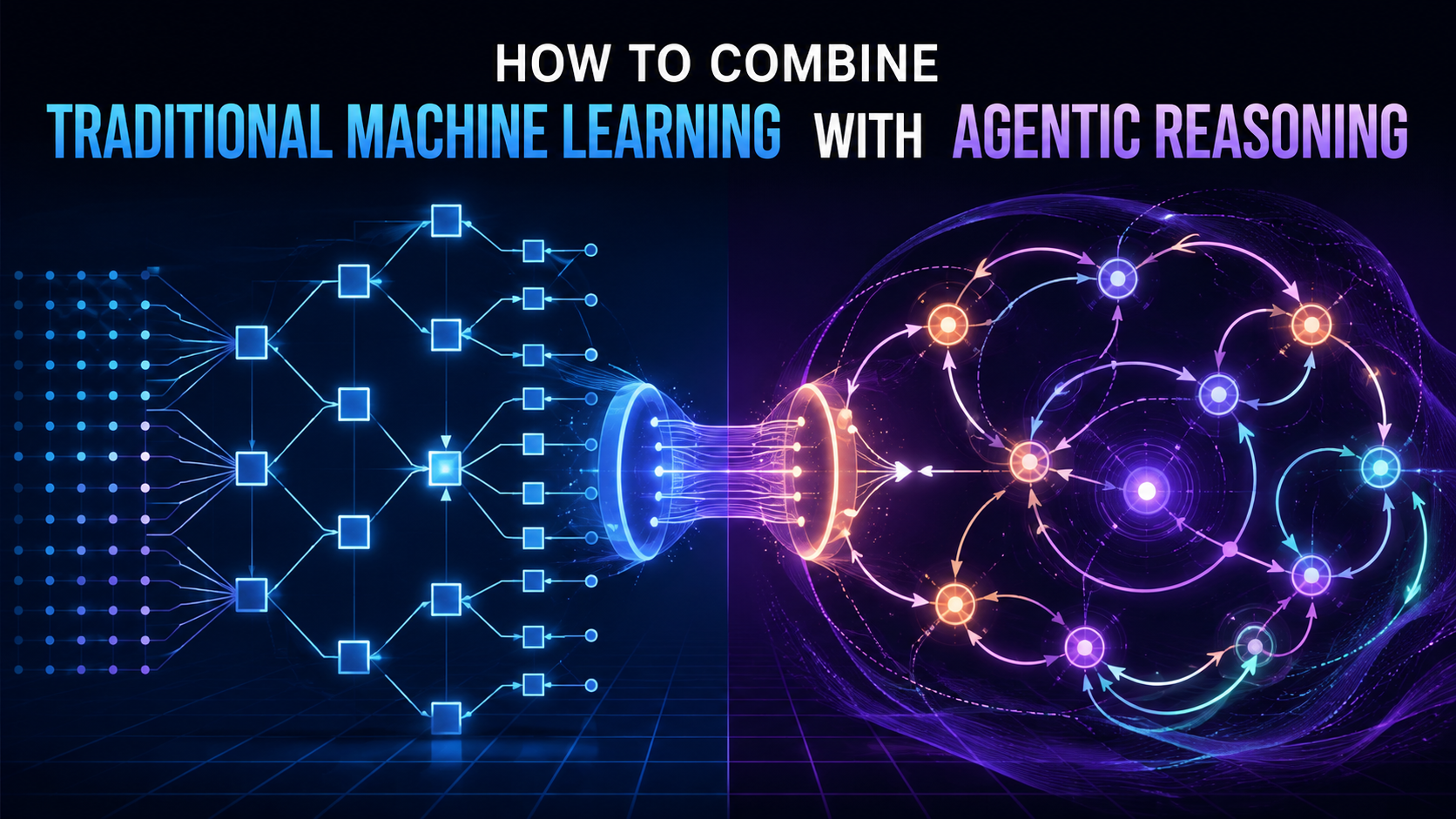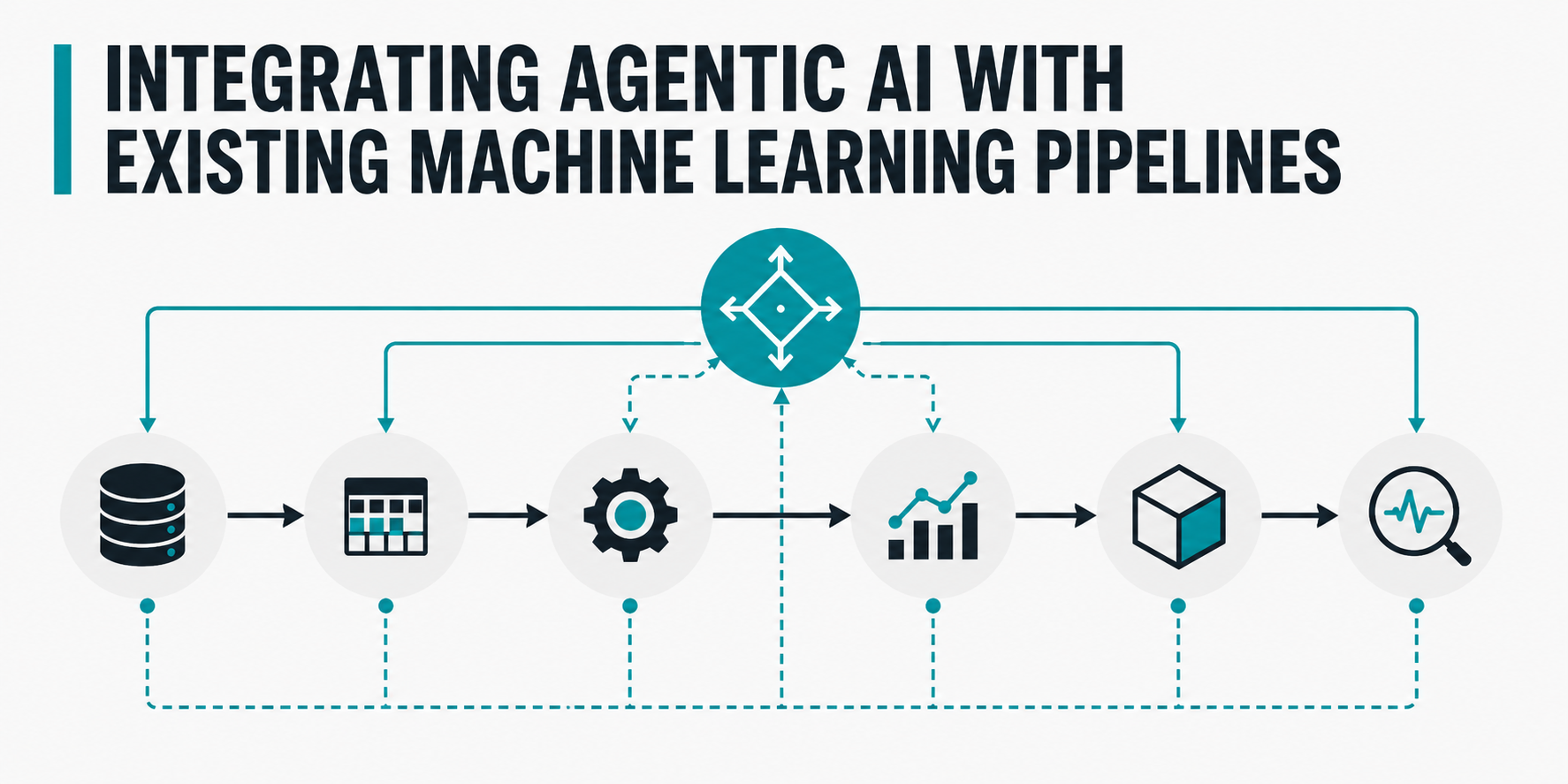
The old argument that classical machine learning and agentic AI are competing approaches misses the point entirely. This tutorial builds a working hybrid system where a scikit-learn random forest predicts customer churn, then hands those predictions to a Llama 3.3-powered agent that decides what to do about them. That’s the architecture shift worth paying attention to — predictive models becoming inputs for autonomous action, not endpoints.
The demo generates a synthetic dataset of 500 customers with two features: monthly spend and support ticket count. A random forest classifier hits 91% accuracy on the test set, which the author correctly notes is “good enough for our purposes.” That’s a refreshingly honest benchmark for a tutorial — no one’s pretending this is production-grade churn modeling. The real point is the wiring.
What follows is a RetentionAgent built with object-oriented Python, connected to Groq’s Llama 3.3 model as its reasoning core. The agent gets two mocked tools: one for customer outreach, another for retention offers. In production these would be API calls to a CRM or messaging platform. Here they print messages. The architecture holds either way.
This pattern — classical ML for prediction, LLM for interpretation and action — has been gaining traction since the first wave of LangChain tutorials in early 2023, but most examples stayed toy-like. What’s notable here is the explicit framing of reactive versus proactive systems. A churn model alone just scores customers. The agent decides who gets a discount, who gets a support follow-up, and who gets left alone. That’s a meaningful distinction for teams evaluating where to invest their AI budget. The tutorial runs free in Colab, which lowers the barrier for experimentation, though anyone serious about deploying this pattern will need to think hard about guardrails. An agent that can autonomously offer discounts is an agent that can also make expensive mistakes. The article doesn’t address failure modes, which is the conversation I’d want to have before letting something like this touch real customer data.