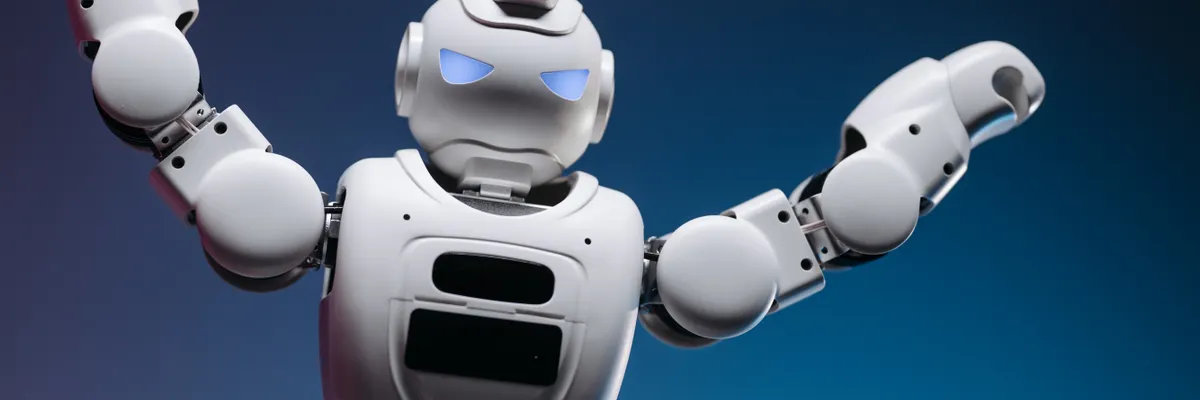
Robotics has a data problem, and simulation is the only way out. While LLMs feast on the entire internet, a robot learning not to crush a coffee cup needs messy, physical feedback that’s dangerous and painfully slow to collect in the real world. The solution, as NVIDIA and others are betting, is a three-computer stack: one to train, one to simulate, and one to run on the machine itself.
This isn’t the old-school simulation used for basic collision checks. The new loop uses GPU-accelerated physics and photorealistic rendering to generate thousands of hours of synthetic experience in parallel. A developer can teleoperate a humanoid in a virtual warehouse, drop it a thousand times, and have a walking policy by lunch—a task that would be cost-prohibitive and destructive with real hardware. The result is a model development cycle where simulation is no longer a testing afterthought but the primary training ground.
Choosing the right engine, however, depends entirely on the job. The field is fragmenting by robot type and task. For contact-rich dexterous manipulation with a humanoid, you might reach for MuJoCo, an open-source engine prized for its precise, model-based physics rather than visual flair. If you need to scale reinforcement learning across thousands of environments on a GPU cluster, the Isaac Sim and Isaac Lab ecosystem is purpose-built for that parallel throughput. The decision tree boils down to a few brutal questions: Do you need scalable synthetic data? Are you doing RL? What sensors matter?
This fragmentation reflects a field moving from research curiosity to industrial deployment. The simulation engine you pick dictates the fidelity of your virtual world and the physics your robot actually learns. It’s a crucial choice, and getting it wrong means your policy might work perfectly in a sterile digital sandbox and fail catastrophically the moment a real-world cable bends in a way the physics engine didn’t predict.