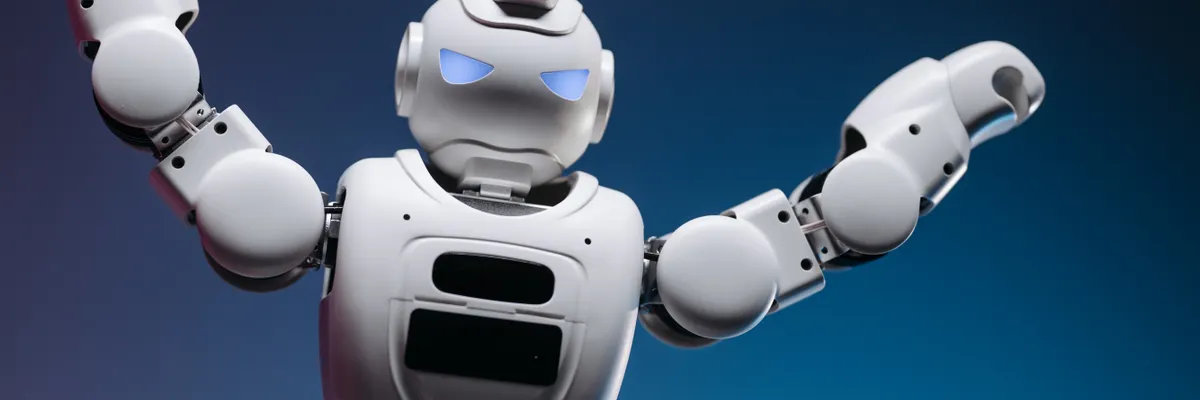
Danijar Hafner’s new San Francisco office is sparse on furniture but dense with potential. Racks of humanoid robots imported from China hang like marionettes in the center of the room, waiting for the intelligence that will bring them to life. Hafner, 31, left Google DeepMind in late 2025 to launch this stealth venture, aiming to solve a persistent bottleneck in robotics: how to operate safely in environments the AI has never seen before. Unlike traditional methods that rely on exhaustive real-world trial and error, his approach lets agents simulate outcomes internally before acting.
The core technology is model-based reinforcement learning. Hafner trains AI agents inside “world models”—digital simulations that emulate physical reality. Within these virtual spaces, agents learn to predict future states, effectively dreaming up scenarios to test their actions. This allows them to navigate unfamiliar floor plans or handle unexpected obstacles without needing prior specific training for each instance. It is a significant shift from brute-force data collection to strategic planning, enabling robots to generalize skills across different physical contexts.
Hafner’s track record suggests this isn’t just theoretical hype. During his tenure at Google, he developed the Dreamer series of agents. Dreamer 2 achieved human-level performance on Atari games, while Dreamer 3 solved the complex Minecraft Diamond challenge. Most impressively, Dreamer 4 learned to mine diamonds using only offline video data, never interacting with the game directly. Timothy Lillicrap, a former manager at DeepMind, notes that Hafner sits in the “top half of 1%” of researchers, often building single-handedly what takes entire engineering teams to accomplish.
This transition from virtual gaming benchmarks to physical humanoid bodies marks the next critical phase for embodied AI. If successful, Hafner’s method could drastically reduce the time and cost required to deploy robots in homes and workplaces. The industry has long struggled with the fragility of robotic control in unstructured settings. By giving machines the ability to imagine consequences before they act, Hafner may finally bridge the gap between simulated proficiency and real-world reliability.