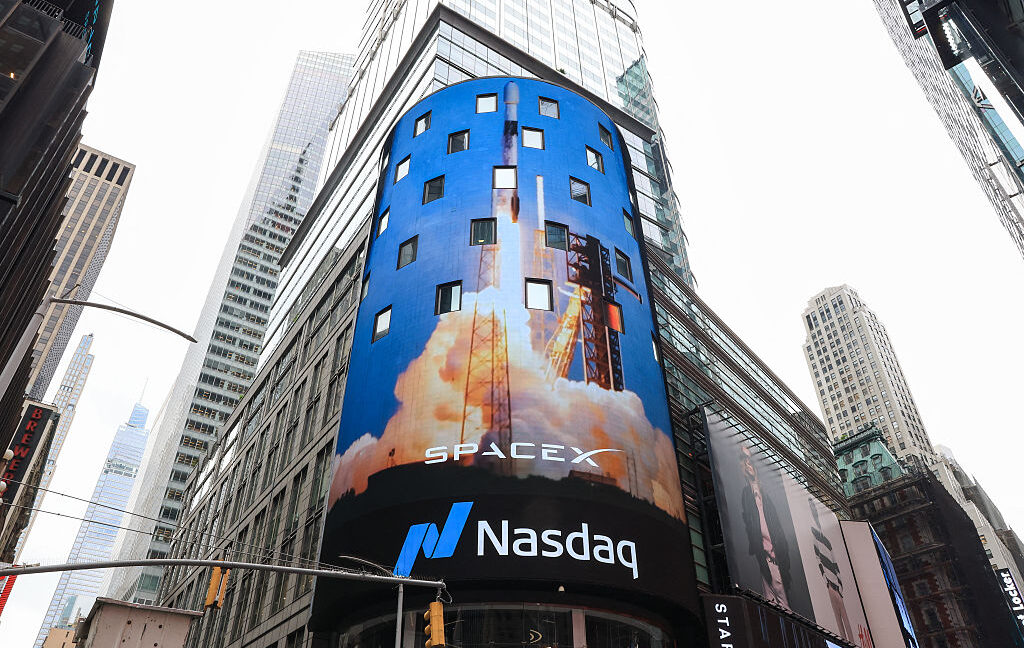
SpaceX shares cratered 10% on Wednesday, wiping out a chunk of the rocket company’s post-IPO gains, after Elon Musk revealed a staggering $16 billion in quarterly capital expenditure on artificial intelligence. The number, double the prior quarter, landed like a brick through the window of an otherwise stellar earnings debut. The company posted $7.8 billion in quarterly revenue—smashing analyst estimates of $6.82 billion and marking a 92% year-over-year surge—and a net loss of $541 million, far milder than the expected $2.12 billion. But none of that could calm investors fixated on the price tag of Musk’s ambition to turn SpaceX into a data center titan.
On the earnings call, Musk laid out plans to scale computing capacity from 2 gigawatts at year-end to “closer to 10GW [than 5GW]” by the end of 2027. Each gigawatt requires tens of billions in development, mostly on chips, and Musk confirmed a future built exclusively on Nvidia hardware. For scale, a 10GW footprint would gulp down as much power as New York City does during a peak summer day. CFO Bret Johnsen tried to sweeten the narrative, projecting over $100 billion in annual recurring revenue by year-end, driven largely by cloud services. It wasn’t enough. Melissa Otto, global head of Visible Alpha research at S&P Global, captured the mood: “It’s ambitious.”
The spending shock landed during a particularly precarious moment for the newly public company. SpaceX raised $86 billion in a historic June IPO, and shares initially soared to $225 before halving to $112 by Wednesday’s close. Musk is now betting his hardware-honed reputation from Tesla and SpaceX on an insatiable demand for compute—a pivot that feels less like a moonshot and more like a high-stakes infrastructure gamble. The market’s immediate verdict is clear: awe at the revenue growth, terror at the cost of chasing it.
What makes this dissonance so sharp is the sheer pace Musk is demanding. Doubling capex in a single quarter and pledging to sustain it for at least two more signals a buildout with almost no precedent in the sector. While hyperscalers like Microsoft and Amazon have spent heavily on AI infrastructure, they’ve done so with established cloud cash flows to cushion the blow. SpaceX is attempting to leap directly from a capital-intensive launch business into an equally capital-intensive compute business, all while its stock is already in freefall. The question hanging over the company isn’t whether the demand for AI compute exists—it does—but whether SpaceX can survive the financial physics of building it.